Dylan Knight
Landscape, seascape & astrophotography.
Photographer & educator.
I'm an Australian photographer based on the Sunshine Coast, Queensland. My first decade behind the camera has taken me from learning landscapes and the night sky to teaching across Australia and New Zealand, with work recognised in national and international competitions.
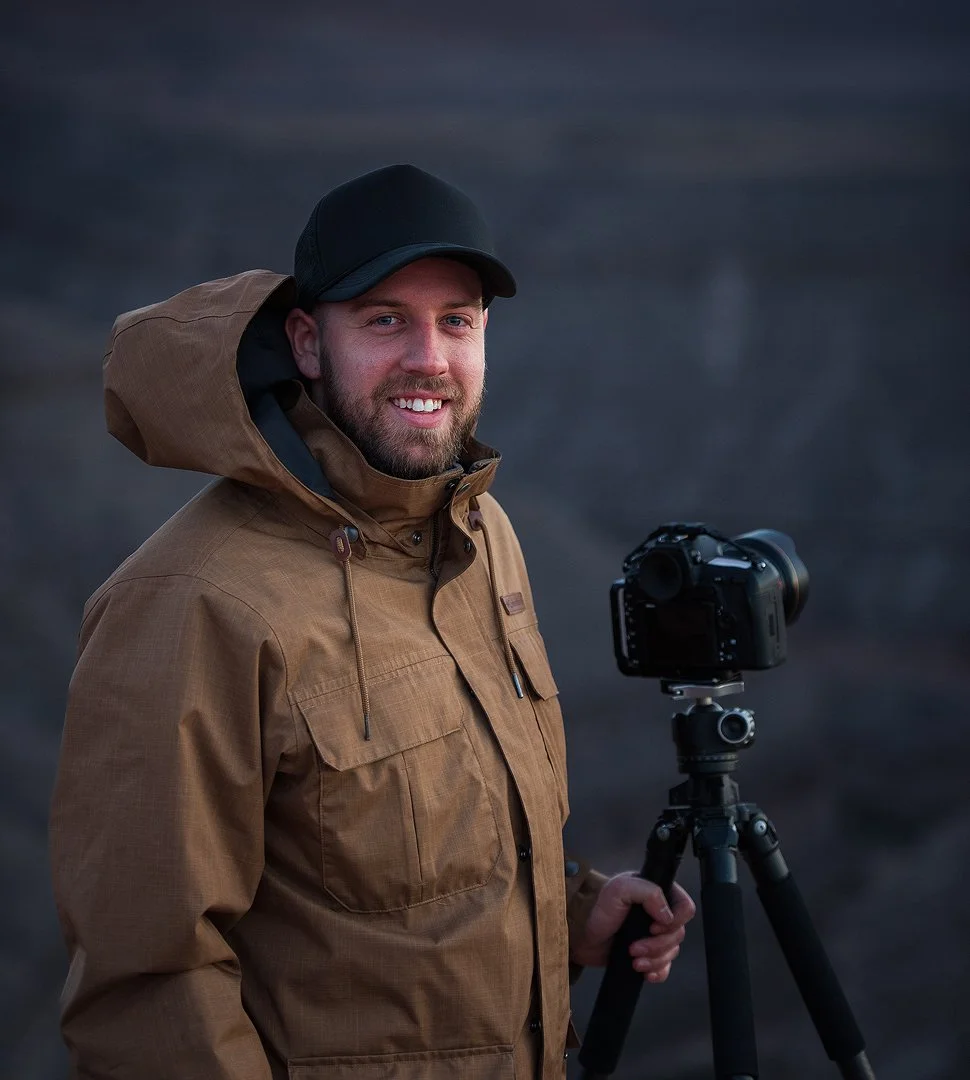
Photography began for me around 2016 during a trip through Utah. Standing above Provo Canyon, looking towards the Wasatch Range in autumn, I tried to capture the scene on my phone. The landscape was extraordinary, but the photograph seemed to lose the scale, light and atmosphere that made it so memorable. I wanted to understand why. Not long afterwards, I bought my first camera, a Nikon D3400, and began learning how to translate what I was seeing into an image that could stand on its own.
What followed was years of learning by doing. Photographing landscapes in the American Southwest gave me more opportunities to experiment with composition, changing weather and the quality of light. I learned that an impressive location doesn't automatically make an impressive photograph. Often the real work lies in finding a viewpoint, understanding the conditions and knowing when to wait.
Finding my direction
As my photography developed, landscapes led naturally to seascapes. Coastal photography introduced a different kind of challenge. Waves change the foreground with every exposure; tides, swell and wind can transform a location or make a planned composition impossible. I became increasingly interested in how those moving elements could be used deliberately rather than simply recorded.
That approach continues to shape my work on the Sunshine Coast and wherever I travel. I enjoy the technical side of photography, but it's always in service of the final image: choosing the right light, recognising when a scene has potential, and knowing how to bring the elements together without losing the character of the place. I came to value preparation just as much as the moment of capture, because both make the difference between a record of somewhere and a photograph worth returning to.
The pull of the night sky
Astrophotography opened up another side of photography entirely. Capturing the Milky Way meant learning to work in near darkness, plan around moonlight and seasons, and balance the night sky with a landscape that still felt natural. It also demanded more from the editing process. A successful night photograph depends on decisions made in the field and on how carefully the captured detail is handled afterwards.
Over time, that interest grew beyond wide-field nightscapes into deep-sky astrophotography. Photographing galaxies, nebulae and other distant objects is a different discipline, built around repeatable capture, gathering enough usable data and extracting detail without pushing an image beyond what the data supports. I enjoy that combination of practical problem-solving and discovery. No matter how much experience I gain, the night sky keeps giving me something new to work towards.
From photographer to educator
I began teaching photography in 2019, initially through local workshops. Those sessions grew into Dylan Knight Photography's small-group, multi-day experiences across Australia and New Zealand, bringing together landscape, seascape and astrophotography in the field. I've taught more than 300 photographers through that work, alongside teaching Nikon School sessions.
I've generally kept destination groups to four photographers because individual attention matters. For me, teaching isn't about taking people to a location and showing them which settings to copy. It's about explaining what to look for, why a technique works and how to respond when the light or weather changes. Planning, composition, camera technique, reviewing results and editing in Lightroom and Photoshop are all connected parts of the same process.
Leading photographers in unfamiliar places has also reinforced lessons from my own practice. Conditions rarely follow an itinerary. You have to make considered decisions about access, safety, timing and whether the photograph you're hoping for is actually possible that day. Helping someone develop that judgement, then carry it into their own photography, is what makes education rewarding to me.
The work and recognition
Alongside my field and education work, I earned Certified Professional Photographer (CPP) status through the Professional Photographers' Association of Queensland. My photographs have also received Gold, Silver, finalist and honourable mention recognition in Australian and international competitions, across landscape, seascape, monochrome and astrophotography. Recognition is not what first drew me to a camera, but it has been meaningful to have the work assessed beyond my own expectations.
One particularly significant milestone came in 2026, when a photograph recognised as a finalist in the Astrophotography Prize was selected for Shared Sky: Photos of Our Universe at Chabot Space & Science Center in Oakland, California. Having an astrophotograph selected for a physical exhibition was a reminder of how far that early curiosity about the night sky had developed.
That same year, Under the Southern Arc, a Milky Way panorama photographed in New Zealand's Tasman Valley, placed equal 80th in the Open Nature / Landscape category of the Epson International Pano Awards. It earned a Silver Certificate and was published in the competition's official 2026 Top 100 online gallery. It was particularly rewarding to see a nightscape recognised among photographers from around the world.
Selected awards
- Australian Photographic Prize Two Silver awards (2026); Silver and four Bronze awards (2025)
- One Eyeland Photography Awards Gold for Tree of Erosion and two Bronze awards · 2024 edition, announced 2025
- Epson International Pano Awards Equal 80th, Open Nature / Landscape · Silver and Bronze Certificates (2026); Silver (2025)
- International Photography Awards Six Honourable Mentions · 2025
- The Landscape Awards Two Seascape Finalists and a Landscape Highly Commended · 2026
- The Mono Awards Places Finalist · 2026; finalist and Highly Commended recognition in earlier editions
What keeps me photographing
After a decade, the subjects I photograph have become more varied, but the motivation hasn't changed much. I still enjoy figuring out what makes a place or a subject worth photographing, then putting in the work to make the most of the opportunity. Sometimes that means waiting for a few seconds of light on a coastline. Other times it means returning to the same part of the night sky over multiple sessions to build a single image.
I want my photographs to reflect the experience of being there, whether that's the movement of water, the atmosphere of a landscape or detail in a distant galaxy. The equipment and techniques will keep changing. Curiosity, patience and the willingness to learn remain at the centre of it.