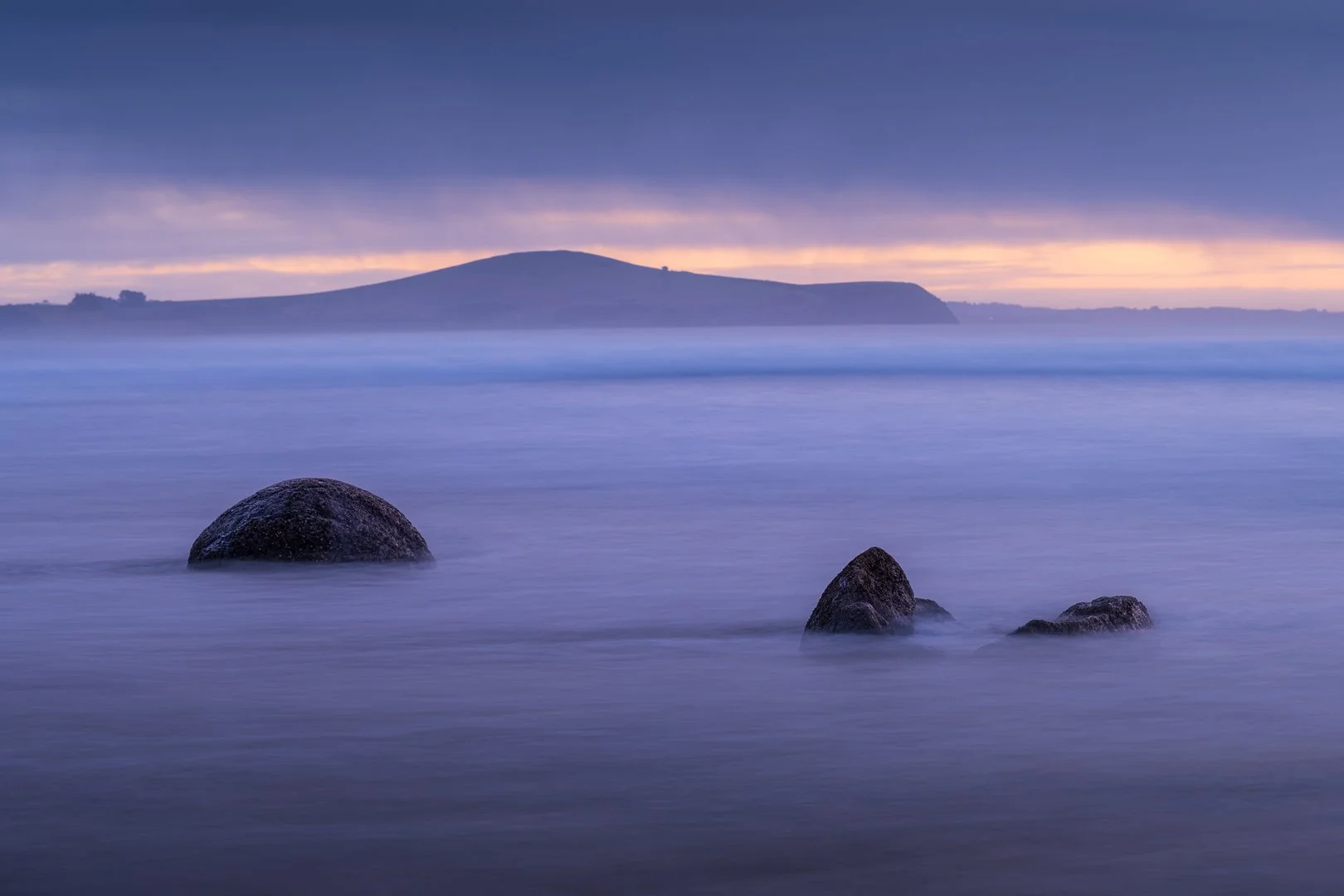
New Zealand South Island Winter Landscape & Astrophotography Workshop (NZ)
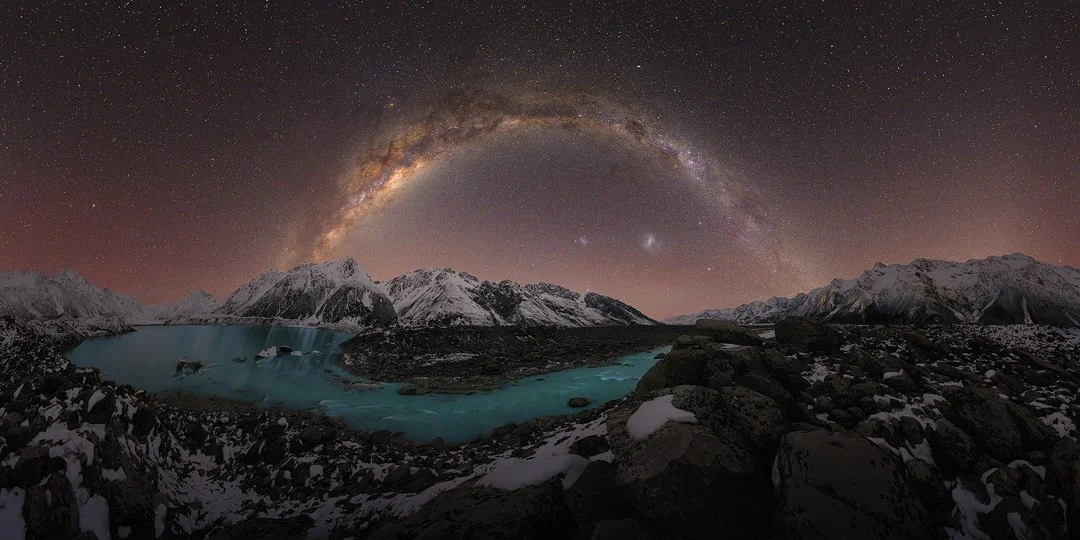
A small-group South Island winter landscape and astrophotography workshop built around snow-capped mountains, alpine lakes, dramatic winter light and new-moon dark skies. The core focus is winter landscape photography, with Milky Way sessions planned whenever conditions allow. Dates are timed to the new moon for the best chance of clear, dark skies, and the week is built to stay productive across real winter conditions. You'll be based at the best address in each village, with your own room every night. Maximum 4 participants.
Before booking, please review the New Zealand Winter Workshop Risk Acknowledgement & Safety Information.
Two premium bases, both the best address in their village: a lakefront Peppers resort at Lake Tekapo, then the landmark Hermitage inside Aoraki/Mt Cook National Park. Your own room every night. Includes field coaching, editing sessions and critique, and a planning pack. Bookings are now open. Places are confirmed in the order deposits are received.
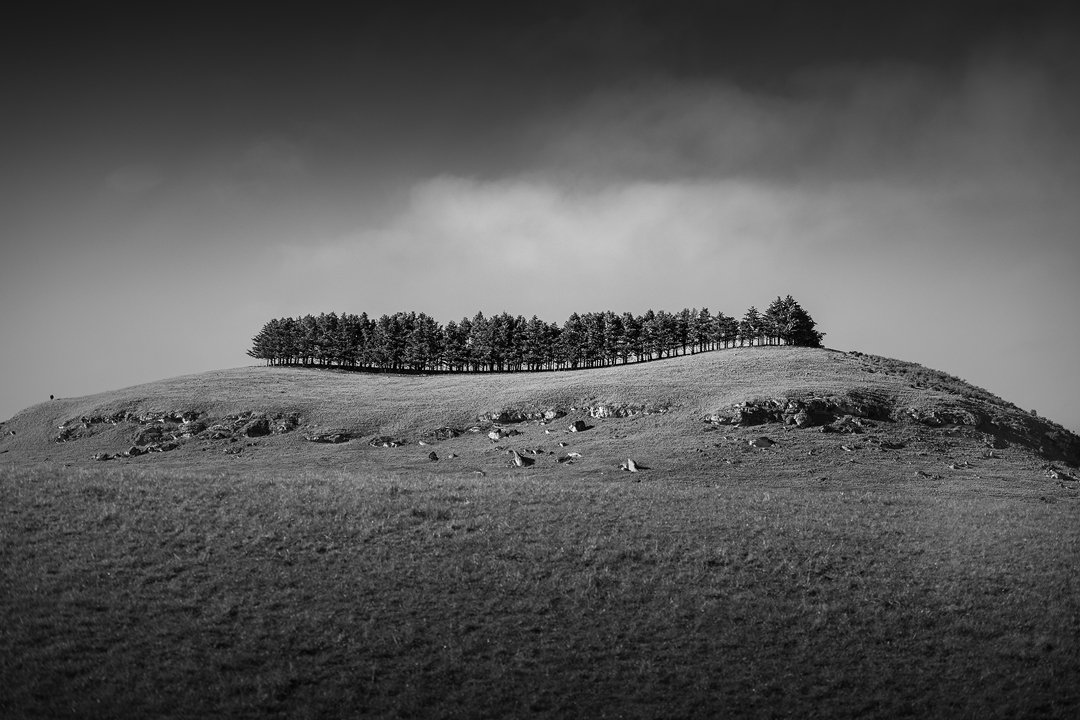
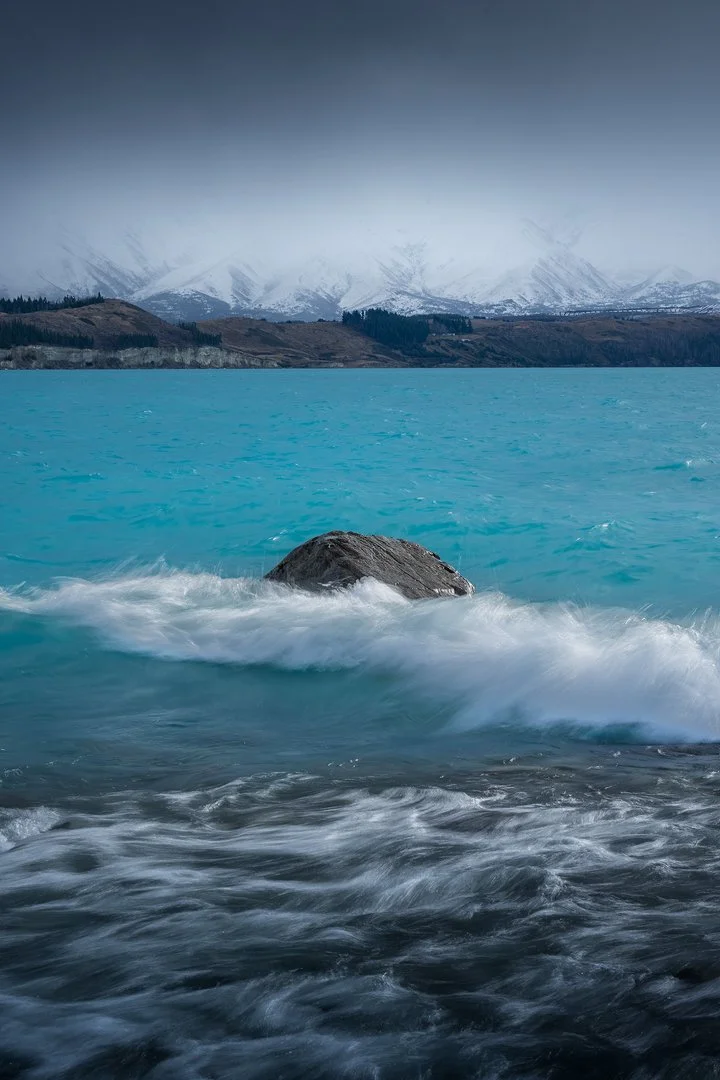
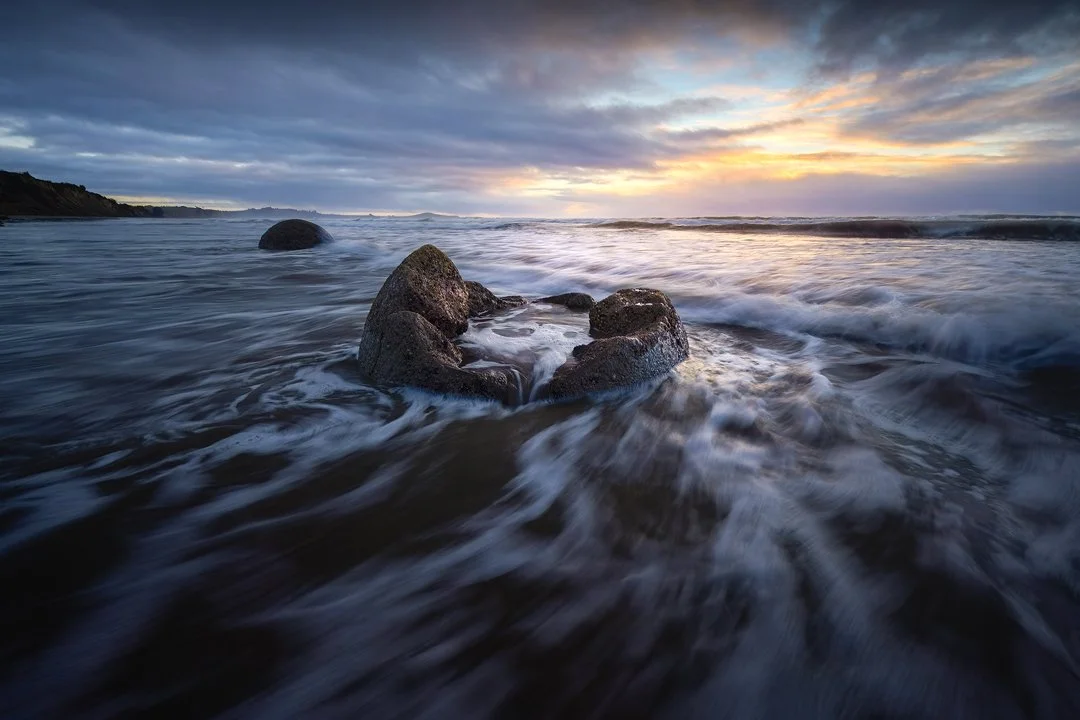
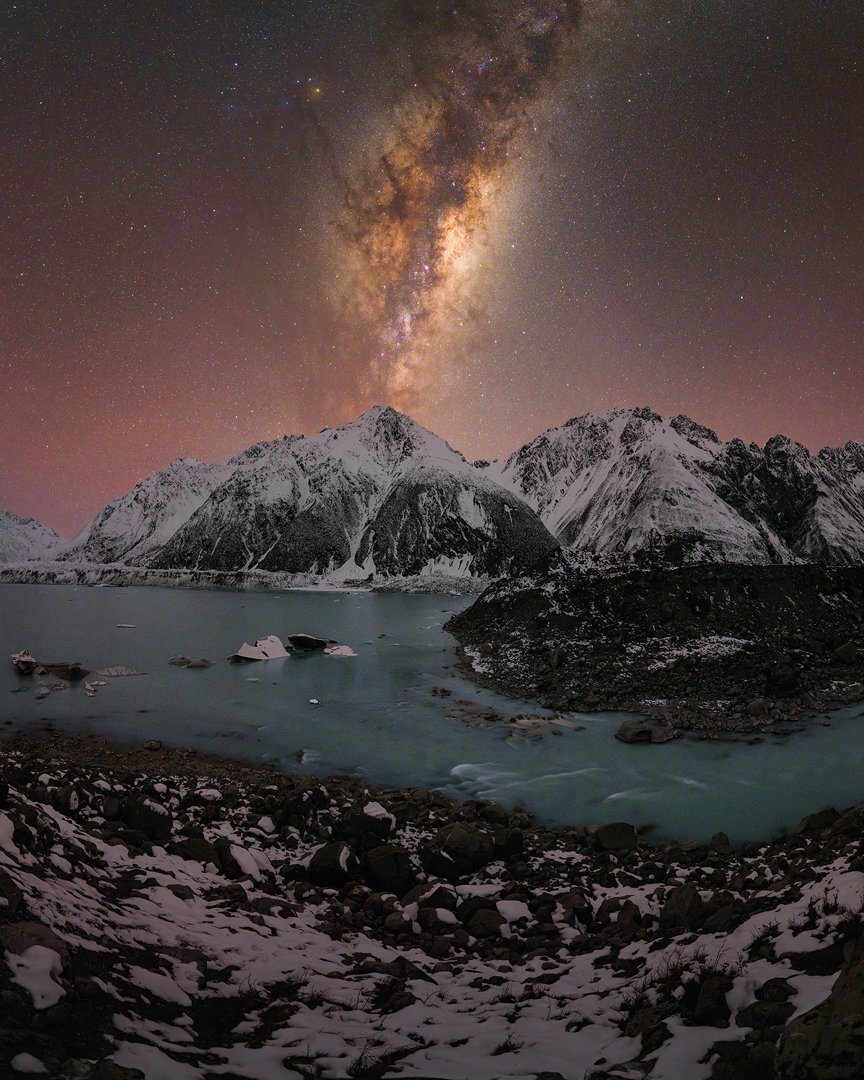
Want to see the kind of images this trip produces? Take a look through the gallery.
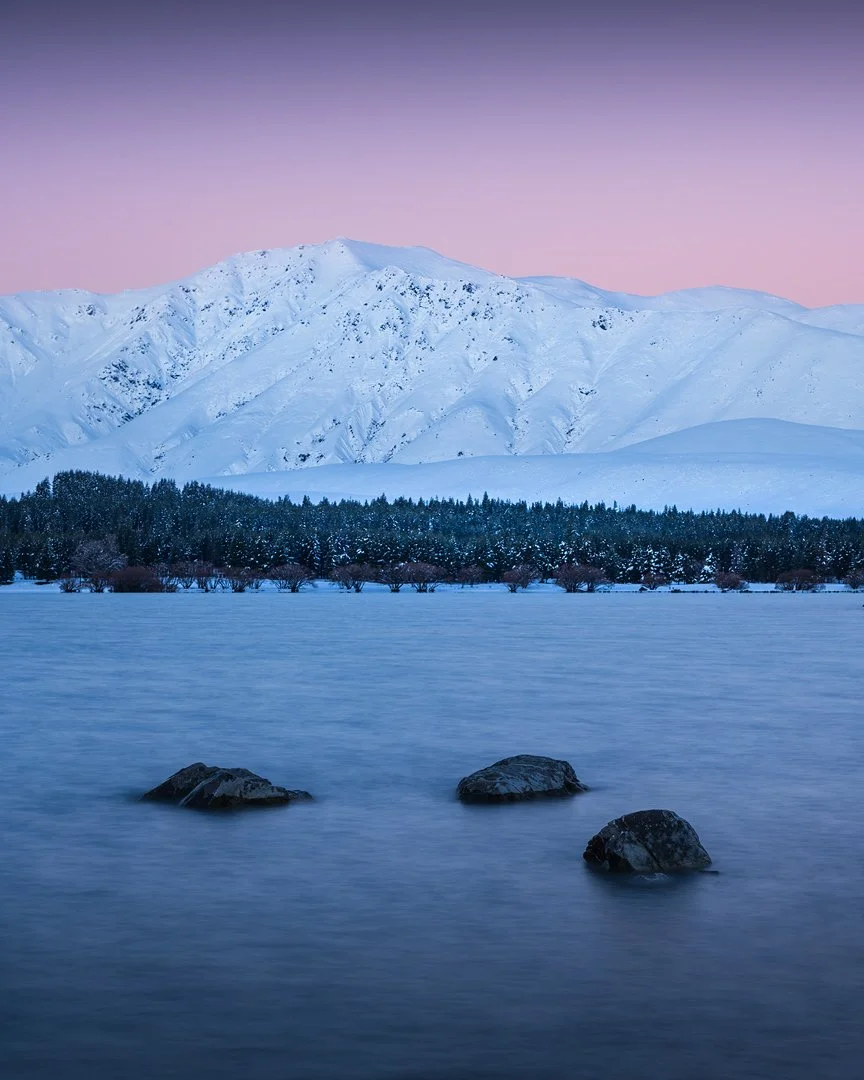
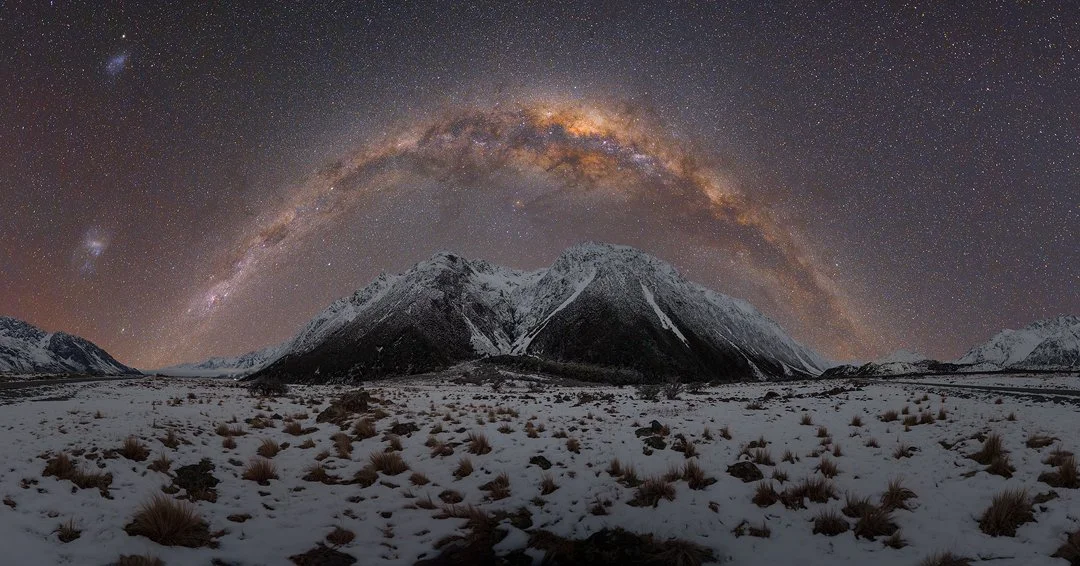
New Zealand's South Island in winter gives us a combination that's genuinely rare: soaring snow-capped peaks, glaciers, icebergs, glacial lakes and dramatic winter light, paired with some of the darkest skies in the world, all within one compact corridor around Tekapo, Pukaki and Aoraki/Mount Cook. That's the reason this workshop is built here, and why it's built in winter.
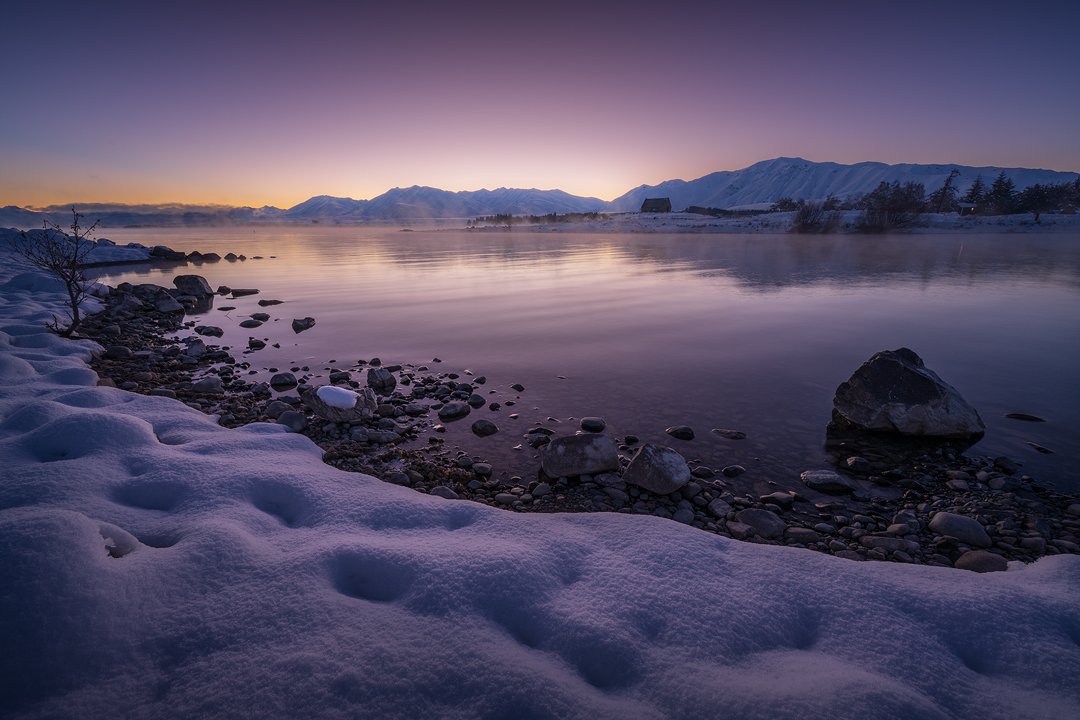
During the day, we're looking for the scenes winter does best. Untouched snow forming leading lines through the foreground. Hoar frost turning ordinary trees into crystalline sculptures. Fog and steam rising off the lakes, jagged peaks catching the last ember of sunset or the first blush of dawn in alpenglow. Winter simplifies the landscape. Snow cleans up messy foregrounds and gives you stronger, cleaner compositions. Dark rock, blue water, white peaks and glacial ice create natural contrast that doesn't need to be forced.
At night, if a clear opportunity opens, we have approved day and night guiding access at specified locations inside Aoraki/Mount Cook National Park, access that's genuinely hard to secure, alongside the Tekapo side of the corridor. It all sits within the Aoraki Mackenzie International Dark Sky Reserve, the largest in the Southern Hemisphere, and we time the week to a new moon so the galactic core rides high through a properly dark sky.
There's a personal side to it too. I grew up in Australia, where real snow was something you had to go looking for. It wasn't until I lived in Utah, with four proper seasons, that I fell in love with winter scenes. The snow, atmospheric conditions and dramatic light have been one of my favourite things to photograph ever since. This workshop is my chance to guide you into those same conditions, share what I've learnt shooting them, and help you come away with images and experiences that stay with you.
That's why New Zealand. That's why winter.
The dates aren't generic. They're timed to the new moon under one of the world's premier dark-sky reserves, so when skies clear there's no moonwash to fight. And because the galactic core sits high through the winter nights, a single clear night can move through several compositions as it travels across the sky.
That means we plan for multiple dark-sky opportunities across the week whenever conditions allow, rather than pinning everything on one window.
Permitted, safety-audited and professionally run
This workshop operates under a Department of Conservation concession for guided landscape and night/astrophotography at specified locations in Aoraki/Mount Cook National Park, and runs under a ROSA-audited Safety Management System with AU$20M public liability insurance. All sessions remain subject to weather, access, DOC conditions, closures and safety decisions.

DOC Approved concession holder
Aoraki/Mount Cook National Park
Who this is for
- Photographers who want to build a stronger winter landscape and astrophotography workflow, not just chase one lucky night under the stars
- Anyone wanting cleaner results: focus discipline, exposure control, and better noise management
- Photographers who like calm coaching in a small, focused group of no more than four
Not the right fit if…
- You want guaranteed stars every night regardless of cloud, wind or closures
- You're not comfortable with cold nights and conservative calls in winter conditions
- You're unwilling to pivot to backups (twilight landscapes, scouting, editing) when conditions demand it
What you'll shoot
- Winter landscapes & alpine light: the Tekapo–Pukaki–Aoraki corridor at its coldest and most dramatic
- Mountains, lakes, snow & frost: texture, weather and mood across the Mackenzie and Aoraki/Mt Cook
- Twilight & blue hour: lake edges, mountain silhouettes, winter colour
- The classic SH80 view: the famous road bending toward Aoraki/Mt Cook over Lake Pukaki
- Milky Way & dark skies (conditions permitting): nightscapes timed to the new-moon core whenever skies clear
- Editing & workflow: a clean Lightroom/Photoshop process and critique sessions
What's included
- Small-group tuition (max 4) across sunrise/twilight/night windows when conditions allow
- Seven nights of premium accommodation, with your own room every night — no twin-share
- Editing sessions + critique to lock in a repeatable workflow
- Planning pack + field routines (so you can repeat the results later)
- Permits/permissions where required + conservative site selection
Not included
- Flights to/from New Zealand
- Meals and personal expenses
- Comprehensive travel insurance (required)
- Adobe subscriptions (Lightroom/Photoshop)
Payment + cancellation
- AU$7,250 per photographer · maximum 4
- AU$1,750 deposit secures your place
- Remaining AU$5,500 balance due 90 days before the workshop start date
- Payment plans available on request
Cancellation policy (locked)
More than 90 days before start: refund of monies paid less $100 admin fee
90 days or fewer: no refund unless the place is filled; if filled, refund less $100 admin fee and any non-recoverable costs
ACL rights apply regardless
Full policy:
dylanknight.com.au/cancellation-policy
Accommodation + transport
- Two bases, each the best address in its village: the lakefront Peppers Bluewater Resort at Lake Tekapo, then the Hermitage Hotel in the heart of Aoraki/Mount Cook National Park
- Both are chosen for access, not convenience. The Hermitage puts us minutes from Whitehorse Hill, the Hooker Valley trailhead and the Visitor Centre, so when a window opens at 2am we're already there instead of driving to it
- Your own room every night — no twin-share, no compromise on rest between early starts and late nights
- Seven nights of accommodation and all workshop transport within New Zealand are included
- Routing stays compact so we can pivot quickly without burning the day on long drives
Night / after-hours approach
This workshop is approved for night guiding and astrophotography at specified Aoraki/Mount Cook National Park locations.
When skies clear, we'll prioritise dark-sky fieldwork from approved close-to-base locations including Whitehorse Hill, Hooker Valley, Tasman Lake / Blue Lakes, Red Tarns and the Visitor Centre area.
For the Lake Pukaki / SH80 corridor, brief photo stops use existing formed pull-offs. If the night doesn't open, we shift into twilight landscapes, editing and critique so the week keeps moving without forcing marginal conditions.
Where you'll stay
Two carefully chosen bases keep us close to the strongest landscape and dark-sky opportunities, while giving everyone a private room and a proper place to recover between early starts and late nights.
Peppers Bluewater Resort · Lake Tekapo
Your Tekapo base, close to the lake, the Church of the Good Shepherd and our main Mackenzie Basin locations. Every participant has their own room, giving us an easy base for sunrise, twilight, editing and dark-sky sessions when conditions allow.
The Hermitage Hotel · Aoraki/Mount Cook
In the heart of Aoraki/Mount Cook National Park. Each participant has their own 25-square-metre Superior Room with two queen beds, an ensuite and views of Aoraki. Staying inside the village keeps us minutes from key locations and avoids unnecessary winter driving when short light or night-sky windows open.
Accommodation, airport transfers and all workshop transport within New Zealand are included. Flights, meals and personal expenses are not included.
What past participants say
Real feedback from real workshops.
 ★★★★★
Verified
★★★★★
Verified
"Capturing the Milky Way over Uluru was a bucket-list moment, and Dylan's knowledge of the location, conditions, and night sky photography made it truly special. His insights into composition and planning added a lot of value. Being out under one of Australia's darkest skies was unforgettable."
★★★★★
Verified
"The small class size made such a difference — only four of us, so Dylan could spend time with each of us individually. His knowledge is incredible, but it was his patience and passion that stood out. I walked away far more confident, especially in low-light and night conditions."
★★★★★
Verified
"With only four participants you get quality individual attention, and he's very generous with his knowledge. He teaches post-processing each day — advanced skills like blending the Milky Way with a blue hour exposure for a clean, noise-free composite, plus focus stacking. One of the best learning experiences I've undertaken."
How the week runs
The week is built around the best light: sunrise, sunset/twilight and dark-sky windows. On full shooting days, the middle of the day is used for editing, critique, rest and recovery. The rhythm flexes with the group, weather and strongest conditions.
Arrive Christchurch → Tekapo
Arrive into Christchurch, collect the vehicle and transfer to Lake Tekapo. Check in to our lakefront base at Peppers Bluewater, dinner and settle in. If skies are clear and the forecast looks limited, we may head out for a simple local astro session.
Tekapo region · first full shoot day
Sunrise around Lake Tekapo or nearby viewpoints, daytime editing/rest, then sunset/twilight in the Tekapo region. Dark-sky session if the sky lines up.
Lake Pukaki + Tekapo dark skies
Sunrise or morning landscapes around Lake Pukaki, then editing, critique and workflow refinement. Final Tekapo-area astro opportunity before moving to Aoraki/Mount Cook.
Tekapo → Aoraki/Mount Cook
Travel the Lake Pukaki / SH80 corridor into Aoraki/Mount Cook, with landscape stops at formed pull-offs along the way. Afternoon check-in at the Hermitage, scouting around Whitehorse Hill and the Visitor Centre area, then sunset or night photography if the window is strong.
Aoraki/Mount Cook · Hooker Valley + Whitehorse Hill
Sunrise, sunset and night options around Hooker Valley, Whitehorse Hill and approved close-to-base locations, balanced with daytime rest and editing.
Aoraki/Mount Cook · Tasman / Blue Lakes / Red Tarns
Flexible Aoraki day using the strongest available window across Tasman Lake, Blue Lakes, Red Tarns, Hooker Valley or Whitehorse Hill. Midday is kept for recovery, editing and critique.
Aoraki/Mount Cook → Tekapo
Return to Tekapo via the Lake Pukaki / SH80 corridor, with landscape stops at formed pull-offs along the way. Afternoon editing wrap, final critique and one last Tekapo-area dark-sky opportunity if skies cooperate.
Transfer to Christchurch · departure
Early departure from Tekapo to Christchurch Airport. Workshop wrap-up happens before departure day so the final morning stays clean and travel-focused.
Planned locations · Tekapo / Pukaki side
- Lake Tekapo foreshore
- Church of the Good Shepherd
- Mt John
- Lake Alexandrina
- Lake Pukaki
- SH80 / Starlight Highway formed pull-offs
- Twizel canals
- Lake Ohau
Planned locations · Aoraki side
- Whitehorse Hill
- Hooker Valley Track
- Red Tarns Track
- Tasman Glacier View Track
- Tasman Lake Track
- Blue Lakes
- Aoraki/Mount Cook Visitor Centre area
Gear expectations
- Camera with manual controls + sturdy tripod (non-negotiable)
- Wide lens + spare batteries (winter drains them)
- Working headtorch with spare batteries, high-grip waterproof footwear and a full cold-weather layering system
- Microspikes or ice cleats, which must be brought and used when directed
- Laptop recommended for editing sessions + live feedback
- Unconventional but useful: a thin closed-cell foam sit pad (warmer knees, drier gear, less fatigue on long waits)
Weather + recovery
This is a full photography week, but not a forced march. We use the strongest windows, rest when needed, and shift between fieldwork, editing and critique so people stay sharp instead of running on fumes. Premium bases and your own room every night mean recovery between early starts and late nights is built in, not an afterthought.
FAQs
Direct answers before you commit.
1) How much does it cost and what's the deposit?
A AU$1,750 deposit secures your place. The remaining AU$5,500 balance is due 90 days before the workshop start date.
2) Why these exact dates?
3) How many people are on the workshop?
4) What's included after the workshop?
5) Can I pay in instalments?
6) What experience level do I need?
7) How fit do I need to be?
8) Are astro / night sessions included?
9) What happens if the weather is bad?
10) What gear should I bring?
11) Where will we stay?
12) What's the cancellation / refund policy?
90 days or fewer: no refund unless the place is filled; if filled, refund less $100 admin fee and any non-recoverable costs
ACL rights apply regardless
Full policy: dylanknight.com.au/cancellation-policy
13) Is this workshop permitted and independently safety-audited?
Secure your place for New Zealand Winter 2027
The workshop is AU$7,250 per photographer. An AU$1,750 deposit confirms your place, with the remaining AU$5,500 due 90 days before the workshop begins. Places are allocated in the order deposits are received.
Before booking, please review the New Zealand Winter Workshop Risk Acknowledgement & Safety Information, cancellation policy and terms and conditions.