Sapphire Coast Photography Workshop (Apr 2027)
Small-group coastal workshop built around the right light, tides and safe access at Sapphire Coast icons — Horse Head Rock, Glasshouse Rocks, Camel Rock and more. Workshop price covers tuition only; accommodation is self-arranged, with recommended options provided after booking.
Leave with stronger long-exposure control, cleaner files and a Lightroom + Photoshop workflow you can repeat on any coastline, not just this one.
Session timing and exact sites are conditions-led and subject to access rules, permits and safety on the day. Follow signage and on-site guidance.
Why the Sapphire Coast
Some locations reward patience. The Sapphire Coast rewards the photographer who shows up before first light, reads the swell, and waits.
I grew up on the Sapphire Coast. These aren't just locations I've scouted — they're places I've spent years learning. I know how the light moves across Horse Head Rock at sunrise, how the swell interacts with Glasshouse at different tides, and which mornings are worth the early alarm. Taking groups here isn't just a workshop to me. It's personal.
— Dylan Knight, CPP
Iconic locations
The Sapphire Coast between Bermagui and Narooma contains some of the most recognisable coastal formations in New South Wales. Horse Head Rock, Glasshouse Rocks and Camel Rock are popular for a reason: strong shapes, ancient geology and endless variation with tide, swell and light.
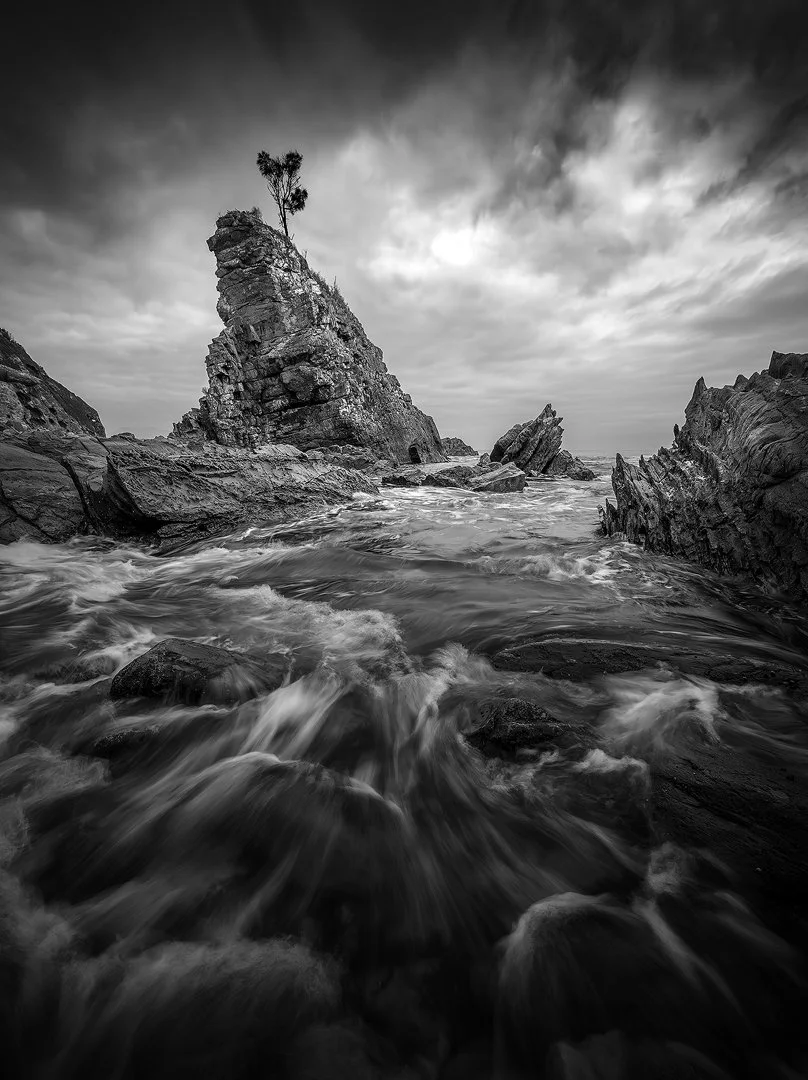
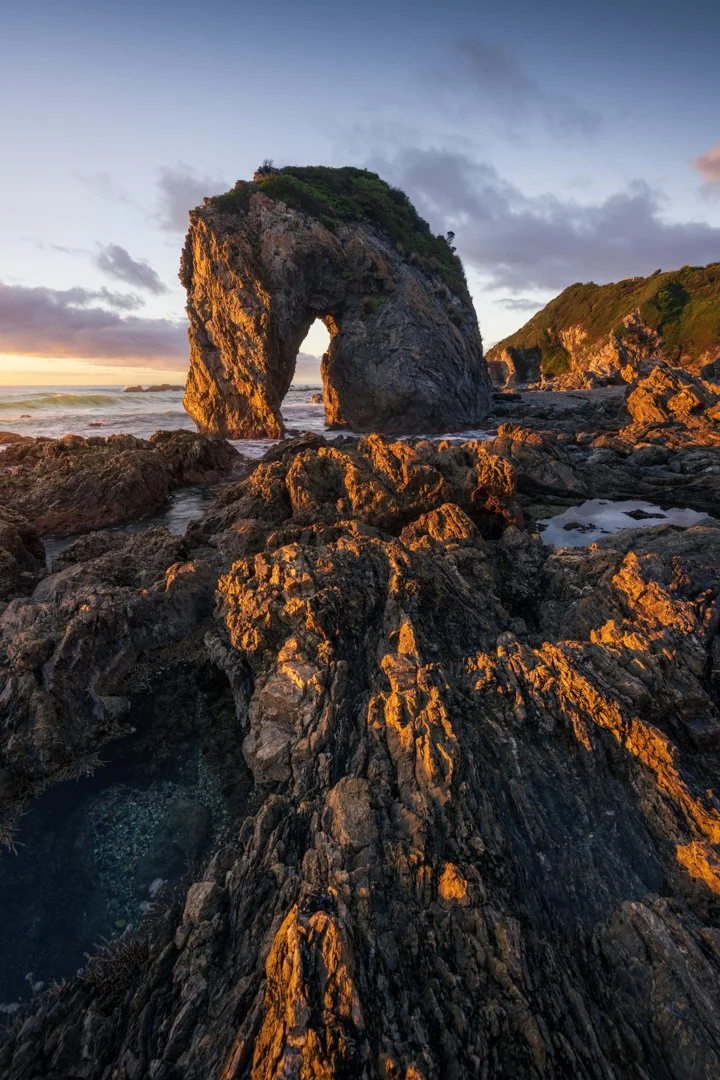
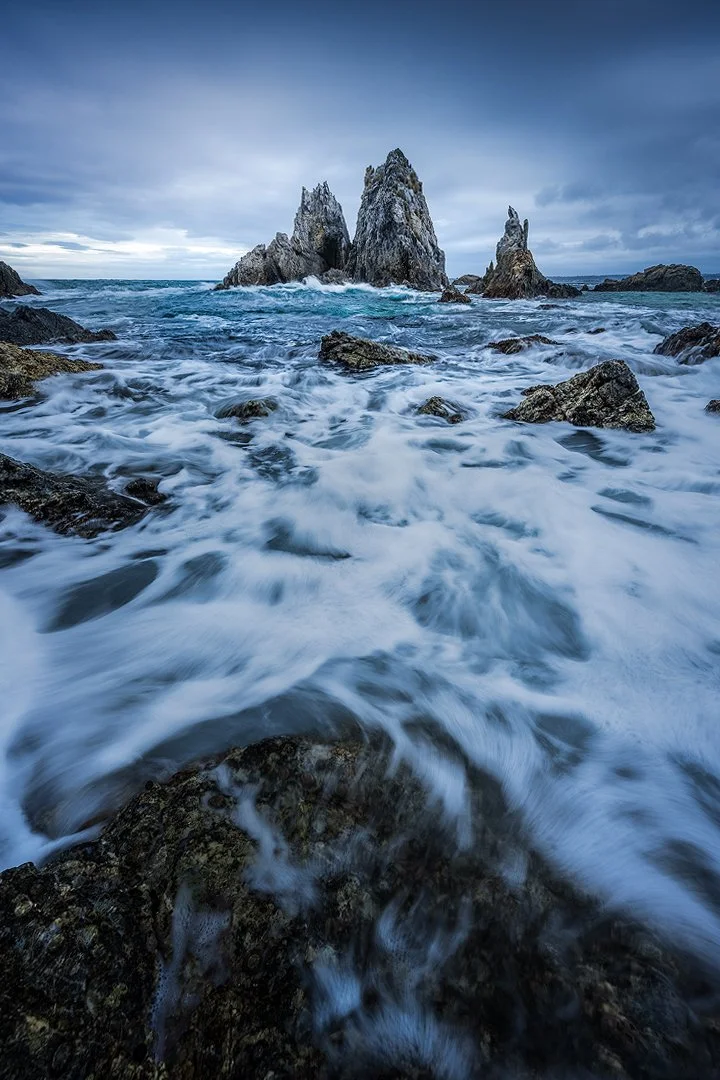
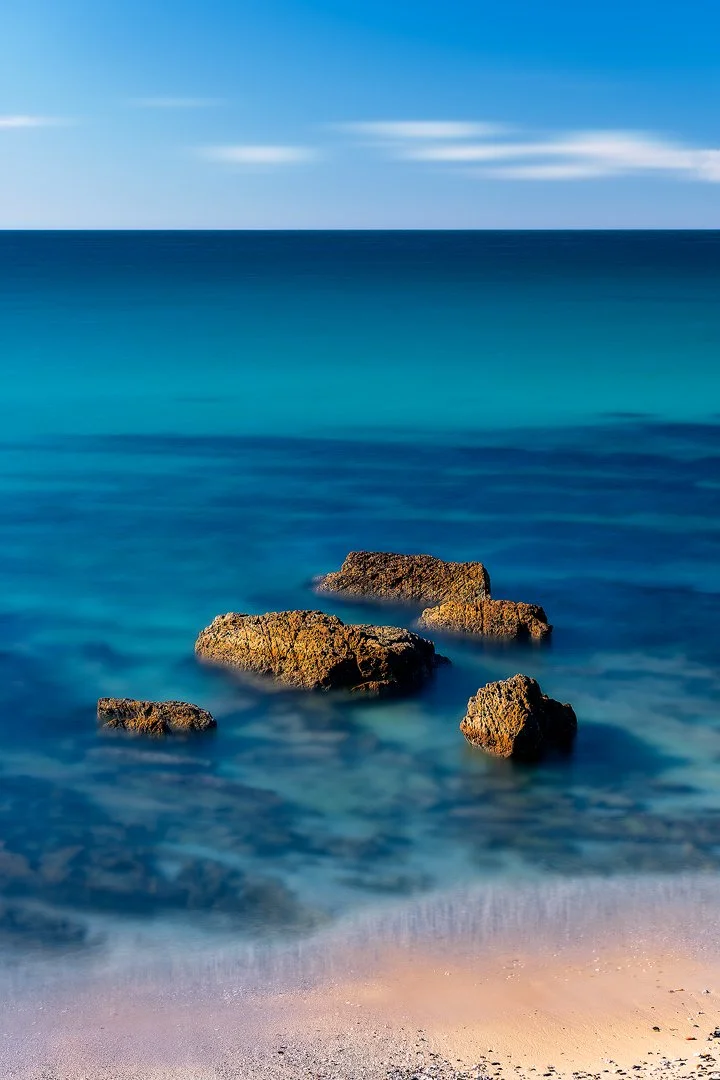
Each location has a distinct character. Horse Head gives you clean geometric lines and strong foreground interest at sunrise. Glasshouse delivers sea stacks, arches and layered rock faces that transform under long exposure. Camel Rock rewards precise shutter timing with silk-smooth water through natural channels. The variety within a single stretch of coastline is exceptional.
Why April specifically
April is one of the strongest shoulder-season windows for the Sapphire Coast. Autumn usually brings milder temperatures, softer early light and more workable conditions than the peak summer period, while still giving us enough atmosphere for dramatic seascape images.
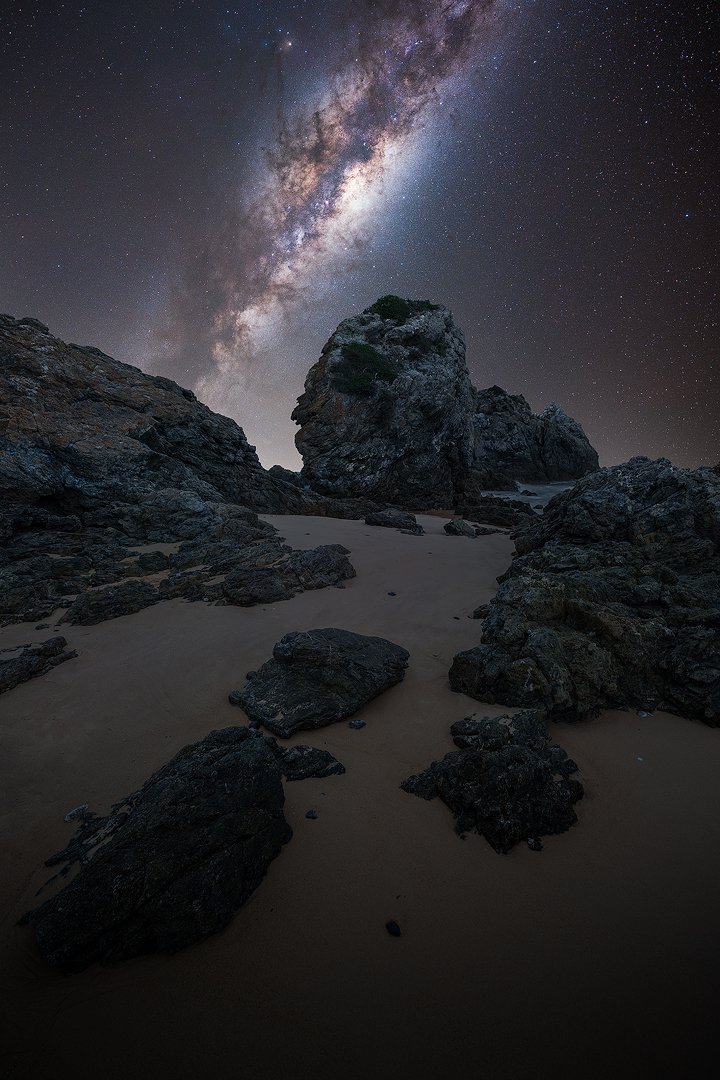
The workshop is also timed directly after the new moon, giving us the best available dark-sky window for April 2027. Night photography remains conditions-led, but the timing is deliberate: coastal light, Milky Way season and flexible field options all line up in one trip.
The light
The Sapphire Coast faces east into the Tasman Sea, giving you unobstructed sunrise light over open water. The coastal rock formations — carved volcanic and sedimentary platforms — catch first light in a way that's difficult to replicate at beaches with gentler gradients.
In April, the lower autumn sun gives us softer transitions into sunrise and sunset than the harsher summer months — ideal for learning composition, shutter timing and tonal control. It's a forgiving coast for learning, with enough variety that advanced photographers are still finding new angles after years of returning.
Depth of access
Beyond the well-known formations, the Sapphire Coast has a network of lesser-known platforms, bays and headlands that most visitors drive past. Mystery Bay, Cuttagee Beach and several unmarked pull-offs offer serious compositional opportunities without the foot traffic of more popular spots.
Knowing where to be and when — based on tide, swell direction, cloud cover and available light — is exactly what this workshop is built around. You'll leave with a framework for reading any coastal location, not just these ones.
Who this is for
- Keen beginners to advanced photographers who want cleaner coastal results and better field decisions
- Photographers who want long exposures that look intentional, not muddy, with a repeatable method
- People who prefer calm, focused coaching in a genuinely small group
- Anyone who wants to self-drive the trip and arrange their own base
Not the right fit if…
- You need guaranteed night-sky sessions regardless of cloud, access or safety
- You're not comfortable moving on uneven terrain in low light
What you'll shoot
- Horse Head Rock: clean sunrise lines, wave timing, strong compositions
- Glasshouse Rocks: sea stacks, twilight colour, optional night setups (conditions permitting)
- Camel Rock: long exposures, leading lines, shutter matched to water energy
- Australia Rock + Mystery Bay: golden-hour textures, flexible options when swell shifts
- Night technique (conditions-led): focus, exposure foundations, clean data capture
- Editing: Lightroom + Photoshop workflow, blending, stacking, seascape finishing
What's included
- Small-group field coaching — guided sunrise and sunset sessions
- Daily editing sessions — Lightroom through advanced Photoshop
- 11-lesson editing video bundle post-workshop (AU$197 value)
- Workflow checklists + location planning tools
- Ongoing gear advice + access to Nikon / NiSi / Leofoto discounts
- AU$20M public liability insurance
Not included
- Accommodation — self-arranged at The Anchorage Bermagui (15% group discount provided on booking)
- Transport to/from the Sapphire Coast — carpooling between participants welcome
- Meals and personal expenses
- Personal travel insurance (strongly recommended)
- Adobe subscriptions (Lightroom/Photoshop)
Payment + cancellation
- AU$750 deposit secures your place
- Remaining balance (AU$2,200) due 60 days before the workshop start date
- Payment plans available on request
Cancellation policy
60+ days before start: refund of monies paid less $100 admin fee
30–59 days: 50% refund of monies paid
Under 30 days: no refund unless seat is filled; if filled, refund less $100 admin fee
ACL rights apply regardless
Full policy: dylanknight.com.au/cancellation-policy
Accommodation
We've partnered with The Anchorage Bermagui as the workshop base — perfectly positioned for early starts and close access to the key shoot locations along the coast.
- Exclusive 15% group discount on your stay at The Anchorage — details provided on booking
- Bermagui location puts you walking distance from the esplanade and minutes from Horse Head Rock
- Book early — April fills quickly along the Sapphire Coast
Night + astrophotography sessions
April is deliberately chosen as one of the most stable periods of the year on the Sapphire Coast, timed to coincide with the Milky Way season and new moon window to maximise our chances of quality night conditions.
Night sessions run when conditions and access line up — and with April's typically calm autumn weather, low swell windows and dark skies, we back ourselves to deliver. If a night doesn't cooperate, we use the time for deeper editing and field technique so you leave with a stronger, repeatable process regardless.
What past participants say
Real feedback from real workshops.
"Before the workshop, my approach was simple — just take the shot. Now it's all about planning, preparation, and waiting for the light. Understanding light as the most fundamental element of composition was the real revelation, along with the discipline of arriving early to set up properly. The total experience will exceed expectations."
"Before the workshop, advanced techniques like exposure blending and shooting full manual felt out of reach. Three days on the Sapphire Coast changed that. I left not just with shots I'm genuinely proud of — particularly nailing slow water — but with a real understanding of why the process works. For anyone at an intermediate level sitting on the fence, I'd say do it."
"I've done quite a few workshops with Dylan now, and I keep coming back for good reason. The planning that goes into finding the right locations at the right time for the best light is exceptional — nothing is left to chance. And the Milky Way sessions? Absolutely fantastic. Dylan sets the bar high and consistently clears it."
Logistics, locations, and how it runs
Exact session choices are conditions-led, aligned to tides, swell and access on the day.
Arrive + settle in + sunset session
Make your own way to Bermagui or Narooma. Afternoon workshop brief and gear check. Sunset session at a safe, accessible coastline option.
Sunrise + editing session + sunset (+ optional night*)
Sunrise at Horse Head Rock or conditions-led alternative. Daily editing session: seascape finishing, long-exposure control. Sunset session. Optional night opportunity (conditions permitting).
Sunrise + editing session + sunset (+ optional night*)
Sunrise at a different aspect for variety — Camel Rock, Glasshouse Rocks or alternative. Editing session: critique and measurable improvements. Sunset session. Optional night (conditions permitting).
Final sunrise + wrap + depart
Final sunrise — apply everything session. Review and Q&A. Make your own way home. 11-video editing bundle delivered post-workshop.
Planned locations
- Horse Head Rock (sunrise lines + wave timing)
- Glasshouse Rocks (sea stacks + twilight colour)
- Camel Rock (long exposures + leading lines)
- Australia Rock (golden-hour textures)
- Mystery Bay (flexible options when swell shifts)
- Cuttagee Beach (curves + reflections + soft colour)
Final site selection each session is conditions-led. If a location is unsuitable, we pivot to a safe, strong alternative.
Gear expectations
- Camera with manual controls
- Solid tripod (non-negotiable for long exposure)
- Ideal: wide lens (14–35mm) + standard zoom
- Telephoto optional for tighter compositions
- Spare batteries + lens cloth + rain cover
- Headtorch (required for early starts + low light)
- Grippy closed shoes (non-negotiable near wet rock)
- ND/CPL filters helpful, not required
- Laptop with Lightroom Classic recommended for editing sessions
Weather + conditions philosophy
We plan around the best available conditions, not a fixed checklist.
- Swell/wind up? Switch to sheltered platforms or higher-ground angles
- Rain? Deeper editing session + planning drills you can reuse anywhere
- Night unsuitable? Extended coastal coaching and workflow depth
Access rules can change. Always follow signage and on-site guidance.
Safety + fitness
- Uneven rocks, wet surfaces, short-to-moderate walks, early starts
- Swell and rogue sets are real — if access isn't safe, we move
- Night sessions: headlamp required, activity kept conservative
- Grippy footwear non-negotiable near wet rock and headlands
- Nobody is pressured into risky positions
Moderate fitness is ideal. If you have any concerns, contact us before booking.
FAQs
Direct answers before you book.
How much does it cost and what's the deposit?
A AU$750 deposit secures your place. The remaining balance (AU$2,200) is due 60 days before the workshop start date. Payment plans available on request.
What's included after the workshop?
Can I pay in instalments?
Is this suitable for beginners?
How fit do I need to be?
Are night / astro sessions guaranteed?
What happens if the weather or swell is bad?
What gear do I need?
Where should I stay?
What's the cancellation / refund policy?
30–59 days: 50% refund of monies paid
Under 30 days: no refund unless seat is filled; if filled, refund less $100 admin fee
ACL rights apply regardless
Full policy: dylanknight.com.au/cancellation-policy
8–11 April 2027 · Sapphire Coast
AU$2,950 workshop price. AU$750 deposit secures your place.