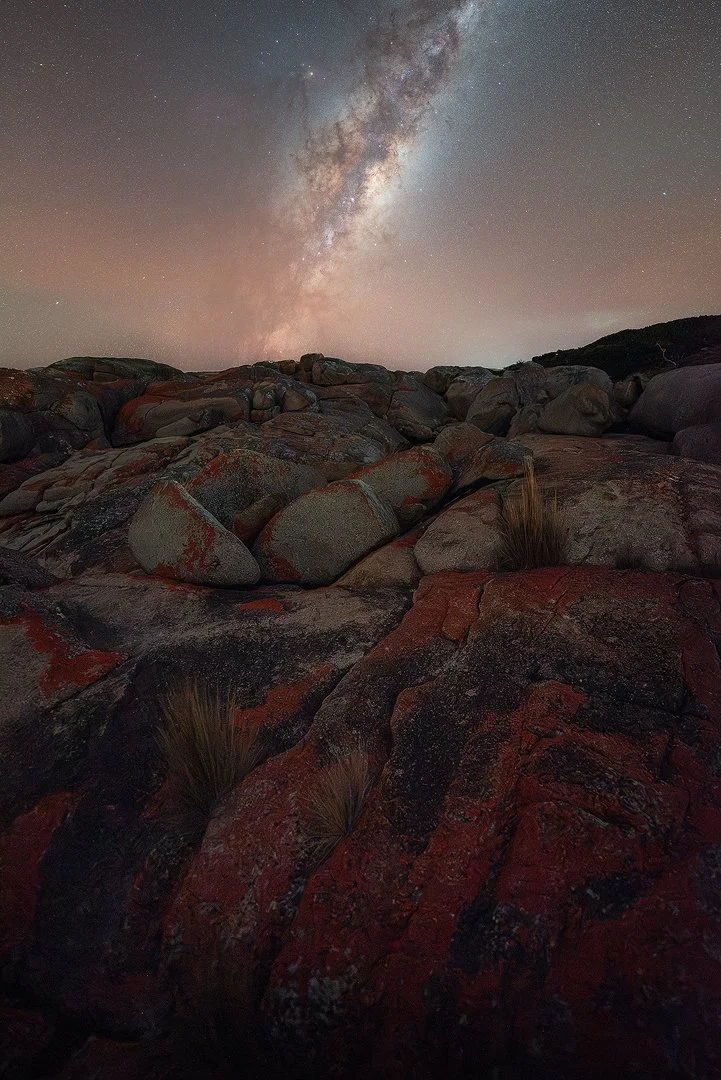
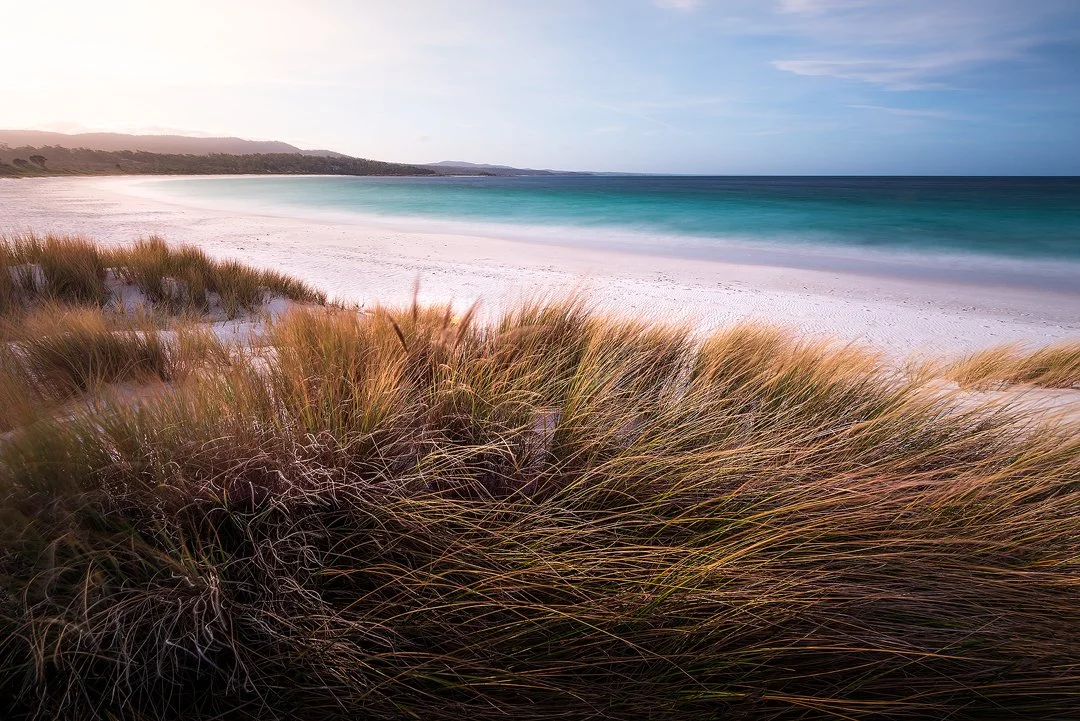
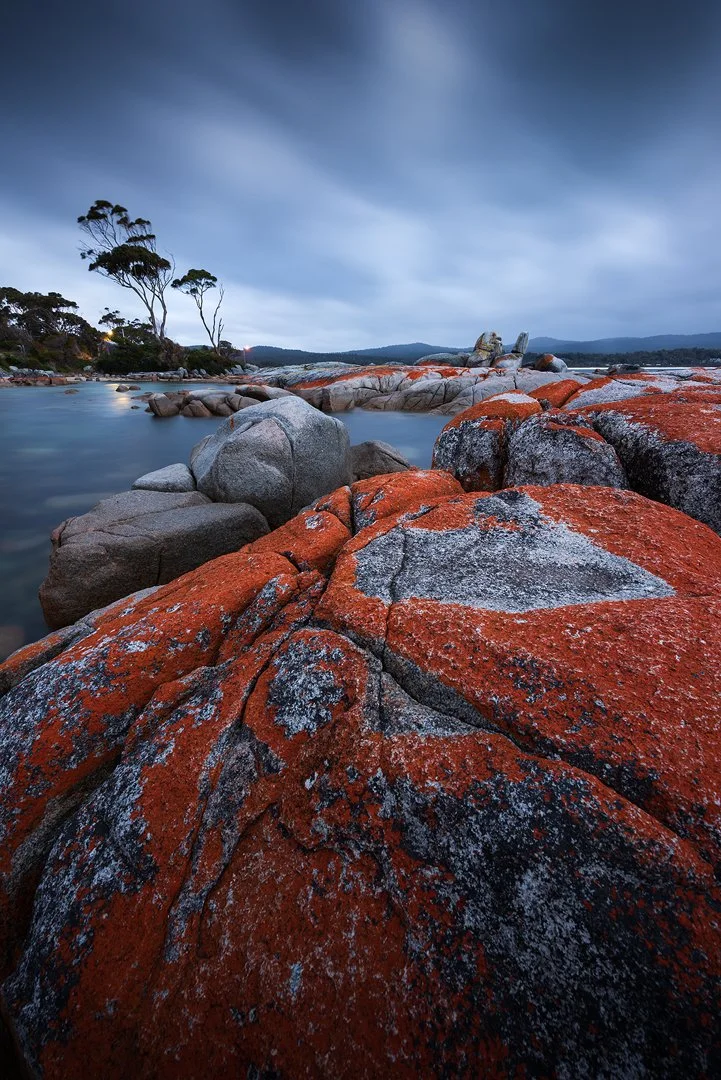
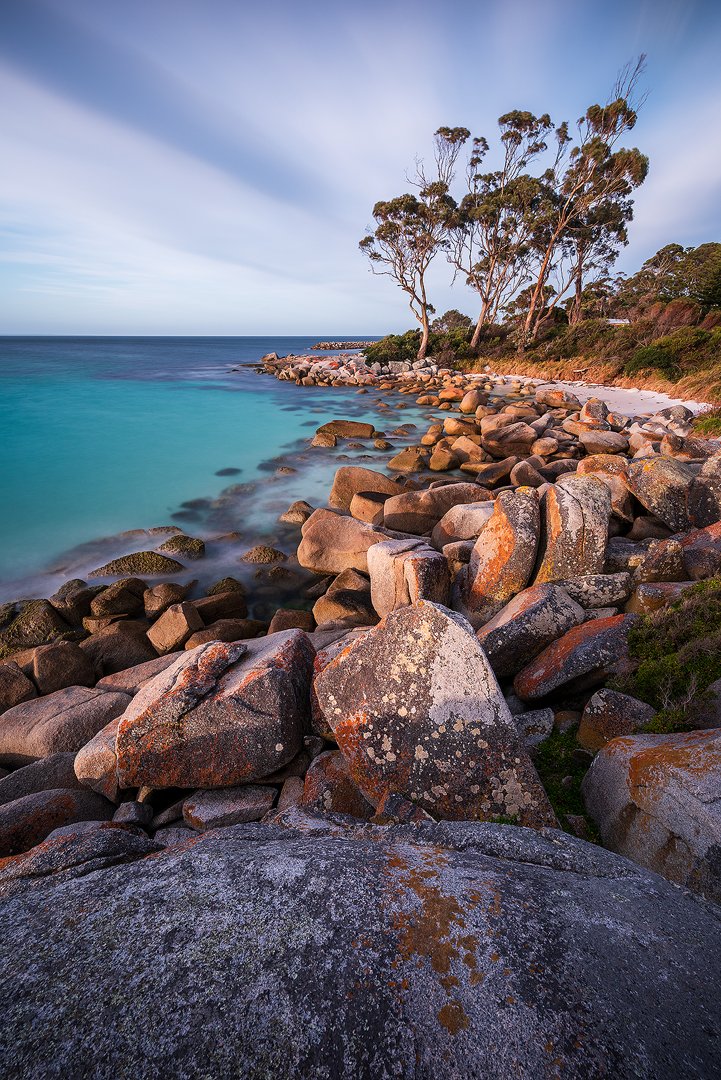
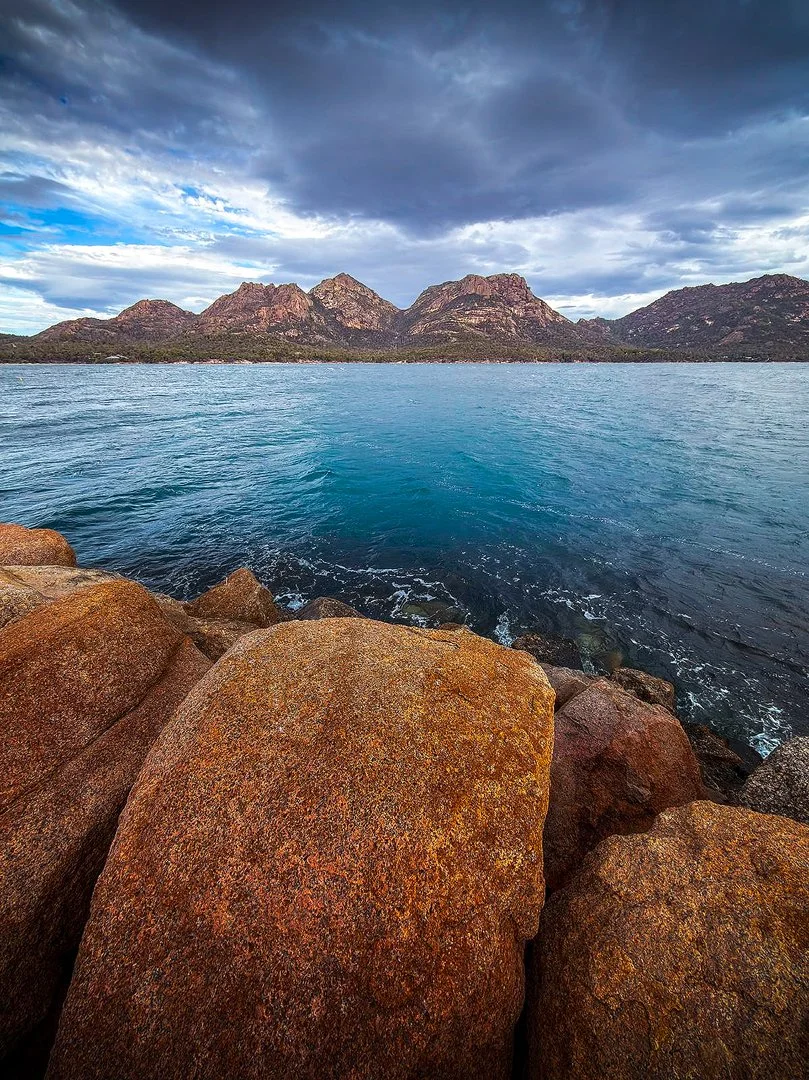
Bay of Fires.
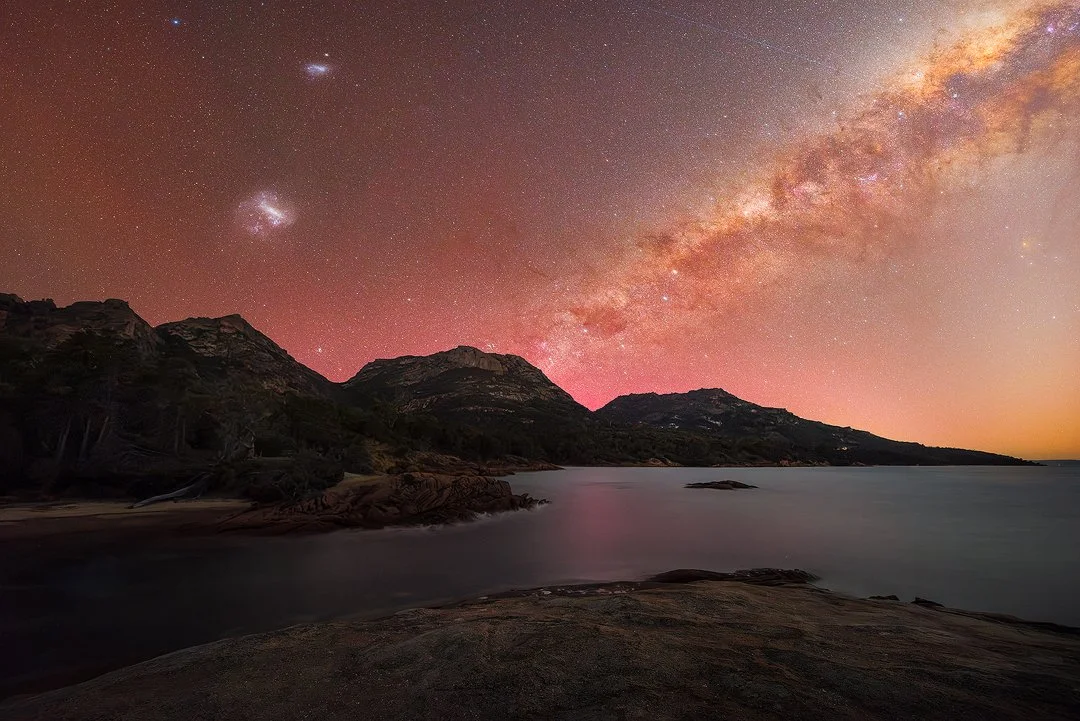
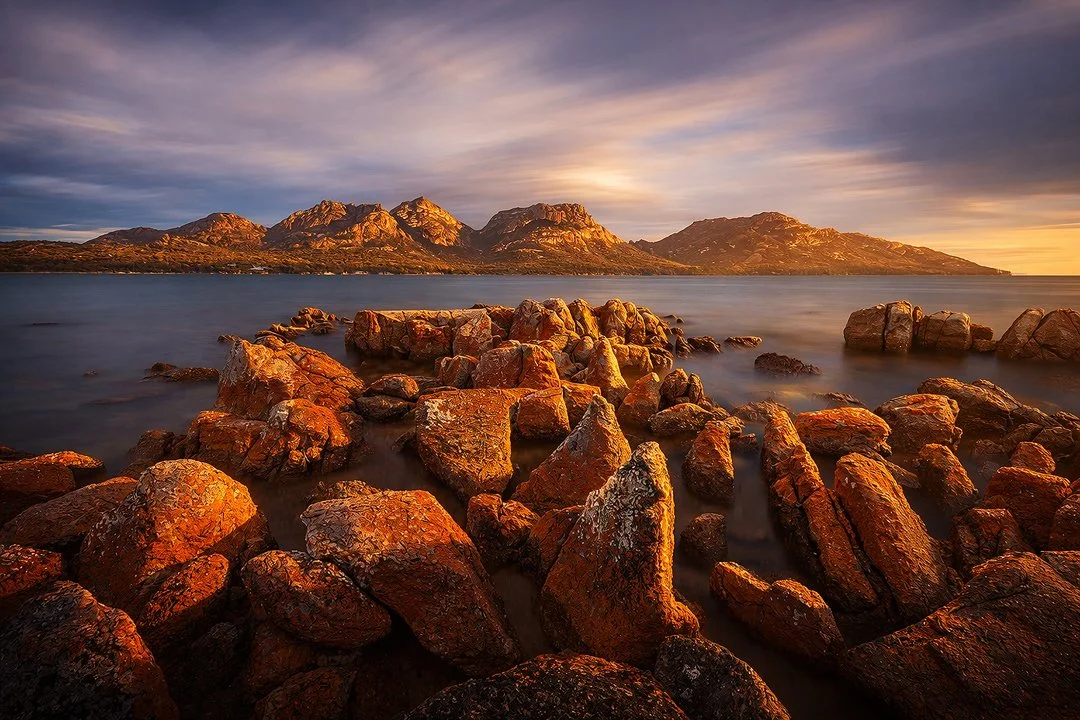
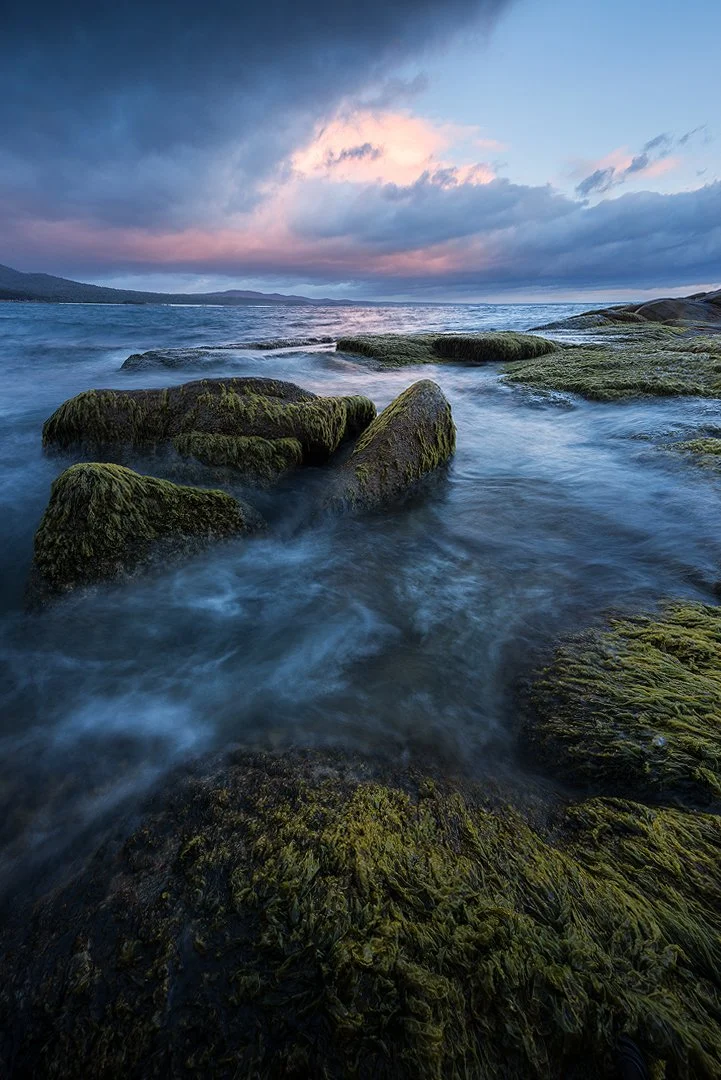
Freycinet.
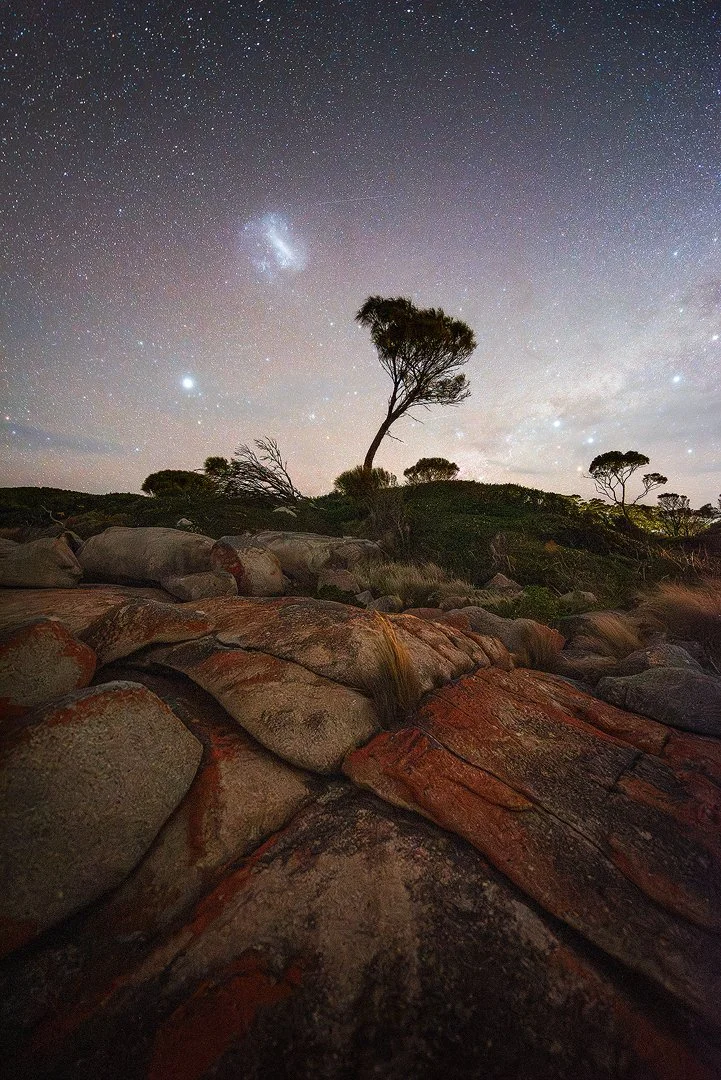
After Dark.
Five days shooting one of Australia's most distinctive coastlines — orange granite, turquoise bays, and the Milky Way over the Tasman Sea from very dark skies. Permit-approved night sessions. Maximum 4 photographers.
Permit-approved twilight & night photography tours
This workshop is now fully booked. Join the newsletter to be first to hear about future Tasmania and destination workshop releases — 48–72h priority access before anything goes public.
Sold out in 3 days. Join the newsletter for priority access to all future releases.
Licensed to be here
This workshop operates under a formal Parks Tasmania business licence, with permit-approved twilight and night photography sessions at named locations across Bay of Fires and Freycinet. It has been planned and approved properly, with the right access, insurance, and logistics already in place.
Why Tasmania. Why February.
Bay of Fires and Freycinet combine orange lichen-covered granite, white sand beaches, turquoise water, and genuinely dark skies in one of Australia's most visually distinctive coastal regions. February gives you warm-season access, long field days, and a moon phase that keeps the night sky highly workable across the workshop dates.
The Lichen
The bright orange lichen-covered granite at Bay of Fires is one of the defining visual features of Tasmania's east coast. Against white sand and clear blue water, it creates a colour palette that is instantly recognisable and photographically unique. In the first and last twenty minutes of light, when the granite glows, it's unlike anything else you'll photograph in Australia.
The Dark Skies
Tasmania's east coast offers very dark, low-light-pollution skies that are exceptionally well suited to astrophotography. The darkest areas sit roughly in the Bortle 1–2 range — genuinely dark by any standard, with minimal artificial glow on the horizon and the Milky Way core well-positioned over open water. For coastal astrophotography, this is a serious destination.
The Hazards
The Hazards rise dramatically above Freycinet's bays and form one of Tasmania's most celebrated coastal scenes. In good evening light from Coles Bay — pink granite peaks, still water, warm sky — they're a genuinely iconic subject for landscape photography, and one of the most rewarding compositions the east coast offers.
The Latitude
Tasmania sits around 42° south. That southern latitude, combined with dark skies, coastal foregrounds, and open Tasman Sea horizons to the east, makes Tasmania's east coast one of the finest astrophotography destinations on the planet. The Milky Way rises steeply over open water, the skies are genuinely dark, and the combination of seascape access and night-sky potential is world-class.
What you'll shoot
- Bay of Fires: lichen-covered granite, turquoise bays, surf motion, long-exposure seascapes, textural detail in the rocks
- Freycinet: The Hazards at golden hour, Wineglass Bay, Sleepy Bay, Honeymoon Bay, coastal coves and silhouettes
- Astrophotography: Milky Way over the Tasman Sea and iconic foregrounds — permit-approved twilight and night sessions at named locations
- Long exposures: shutter choices matched to swell and wave energy for intentional water motion
- Sunrise and sunset: timed around the best light at each location across every day
What you'll come home with
- A portfolio of coastal and night-sky images you're genuinely proud of — not snapshots, finished work
- A repeatable long-exposure workflow that transfers to any coastal location
- Astrophotography technique from scratch or advanced refinement — exposure, focus, framing
- Composition instincts built on complex foregrounds: granite, water, texture, sky
- A daily Lightroom workflow that gets your files finished, not just processed
- The confidence and planning skills to run your own sessions independently
- Understanding of how to read tide, swell, wind, and light quality — and act on it fast
What's included
- Small-group tuition across all sunrise, sunset, and night sessions — maximum 4 photographers
- Accommodation included for all 4 nights
- Launceston Airport transfers included both ways
- All workshop logistics covered — transport between accommodation and every location
- Daily editing sessions — review, workflow, and finishing each afternoon
- 11-video editing bundle post-workshop (value AU$297)
- Gear advice before and after the workshop (free)
- Access to discounts on Nikon, NiSi, and Leofoto gear
Not included
- Flights to/from Launceston (LST)
- Meals and personal expenses
- Personal travel insurance (strongly recommended)
- Adobe Creative Cloud subscription
Who this is for
- Photographers who want to shoot coastal and astro locations properly — not just snap and leave
- Best suited to those who want stronger field technique and better finished images, from confident beginners through to advanced shooters
- Anyone who values small-group instruction, real access, and a properly planned experience
Payment + cancellation
- AU$750 deposit secures your place
- Remaining balance due 60 days before the start date
- Payment plans available on request
Cancellation policy
60+ days before start: refund less AU$100 admin fee
30–59 days: 50% refund
Under 30 days: no refund unless seat is filled; if filled, refund less AU$100 admin fee
ACL rights apply regardless.
Full cancellation policy →
Getting there
- Fly into Launceston (LST) — direct from most Australian capitals
- Airport transfers included on Day 1 and Day 5
- All workshop transport included throughout — Bay of Fires, Freycinet, and all sessions
- Route: Launceston → Bay of Fires (Binalong Bay area, 2 nights) → Freycinet (Coles Bay area, 2 nights) → Launceston
Five days, front-loaded with light
Every session is built around the best light and conditions on the day. Sessions are selected from the approved location pool — not every location will be visited in every run, and that's by design. We go where the light takes us.
Arrive Launceston · Transfer · Sunset on the granite
Fly in, collect from Launceston Airport, and transfer to the Bay of Fires area. Evening session at the coast to shoot your first golden hour on the lichen-covered rocks — orange granite, turquoise water, and the light you came for.
Bay of Fires · Full day + Milky Way over the Tasman Sea
Sunrise session on the granite. Afternoon editing session to lock in your best frames from Day 1. Sunset for a different aspect. Night sky session — Milky Way over the Tasman Sea from Bortle Class 2 range skies with lichen-covered foregrounds.
Bay of Fires · Transfer south · Freycinet at golden hour
Sunrise at Bay of Fires. Transfer south to Coles Bay. Afternoon rest. Sunset at Freycinet — The Hazards lit gold, still water in the bay, and one of the finest coastal compositions in Australia.
Freycinet · Full day + Night sky session
Sunrise at your best Freycinet option. Editing session — this is where the week's work comes together. Sunset. Night session — Milky Way over Freycinet from very dark, low-light-pollution skies.
Final sunrise · Wrap · Return to Launceston
One final sunrise — by Day 5 Dylan knows exactly where each photographer needs to push. The morning is tailored to close those gaps. Transfer back to Launceston for afternoon or evening flights.
Approved locations
Sessions are selected from the approved location pool based on conditions, light, and what will deliver the best results on the day. Night and twilight sessions run at the named permit-approved locations below.
Bay of Fires Conservation Area
- Binalong Bay Beach
- Binalong Bay Foreshore
- The Gardens
- Sloop Rock Lookout
- Peron Dunes
All sessions — sunrise, sunset, and permit-approved twilight and night photography tours. Roughly Bortle Class 2 range.
Freycinet National Park
Sunrise, sunset + permit-approved night sessions
- Wineglass Bay Lookout
- Honeymoon Bay
Sunrise and sunset sessions
- Sleepy Bay
- Wineglass Bay Beach
- Coles Bay lookout options
Roughly Bortle Class 1 range — genuinely dark skies.
Gear you'll need
- Camera with manual controls (any brand)
- Sturdy tripod — non-negotiable for long exposure and astro
- Recommended lens range: wide-to-mid (14–70mm covers most sessions)
- Telephoto useful for Hazards compression and detail shots
- Polariser and ND filters helpful but not required
- Headtorch and spare batteries for early starts and night sessions
- Laptop for daily editing sessions (strongly recommended)
Fitness and access
Most locations are accessed via formed tracks, established beach access points, and constructed lookouts. Moderate fitness is all you need — comfortable walking on sand, granite, and uneven coastal terrain in low light.
A fitness and medical declaration is completed by all participants before the workshop. If you have any specific concerns, get in touch before booking.
Where you'll stay
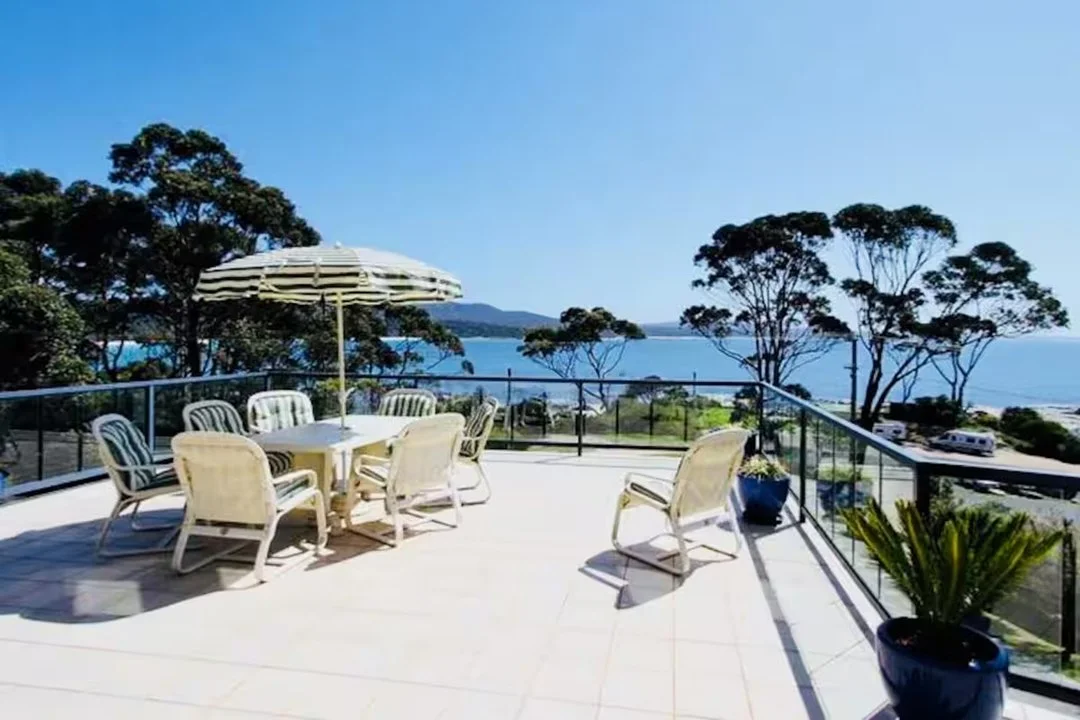
The accommodation is part of the product.
Both properties are private houses booked exclusively for the workshop group — not hotels, not shared lodges. Proper space, proper views, and a base that matches the premium of the locations you're shooting.

What past participants say
Real feedback from real workshops.
"Before the workshop, my approach was simple — just take the shot. Now it's all about planning, preparation, and waiting for the light. Understanding light as the most fundamental element of composition was the real revelation. The total experience will exceed expectations."
"Dylan brings a depth of knowledge and experience that's rare — but what sets him apart is his genuine willingness to share all of it. I learned an enormous amount over the workshop, yet never once felt overwhelmed. The pace was right, the instruction was clear, and every concept built on the last. I'd recommend this without hesitation."
"I've done quite a few workshops with Dylan now, and I keep coming back for good reason. The planning that goes into finding the right locations at the right time for the best light is exceptional — nothing is left to chance. And the Milky Way sessions? Absolutely fantastic."
FAQs
Direct answers about the workshop.
How much does it cost and what's the deposit?
Is astrophotography actually included — and is it legal?
What experience level do I need?
Is accommodation included?
Can I pay in instalments?
How fit do I need to be?
What's included after the workshop?
What's the cancellation / refund policy?
30–59 days: 50% refund
Under 30 days: no refund unless seat is filled; if filled, refund less AU$100 admin fee
ACL rights apply regardless.
Full cancellation policy →
Sold out. Want to know about the next one?
All 4 places filled within 3 days of release. Join the list to be notified when future destination workshops open.