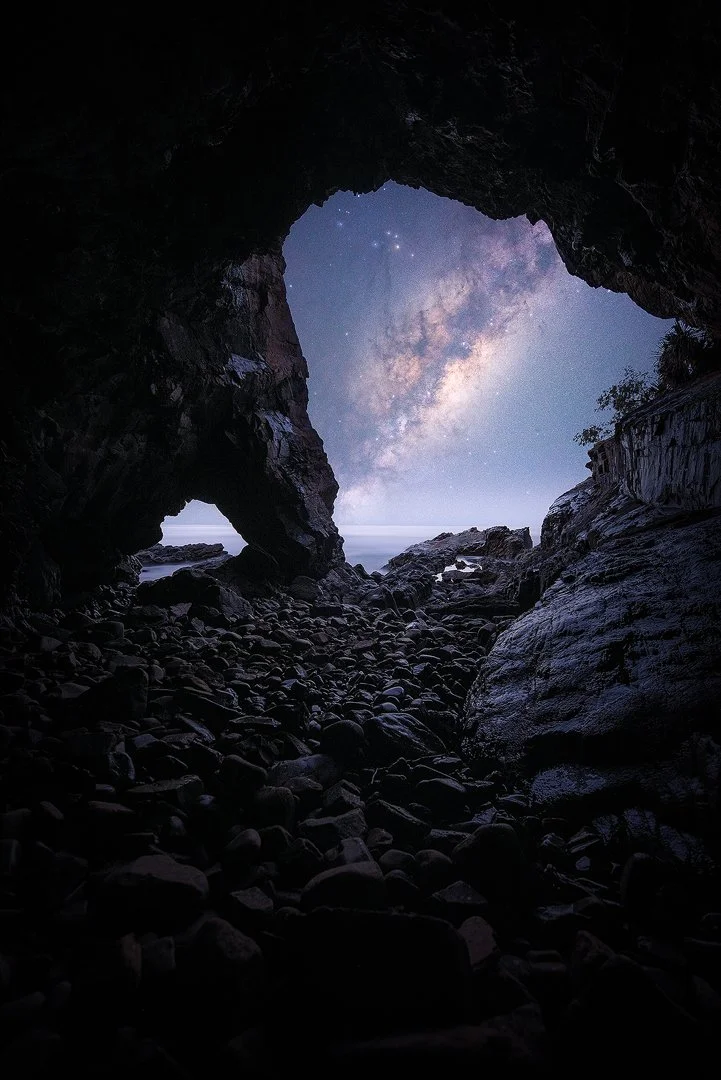
Noosa National Park Seascape + long exposure 17–19 April 2026

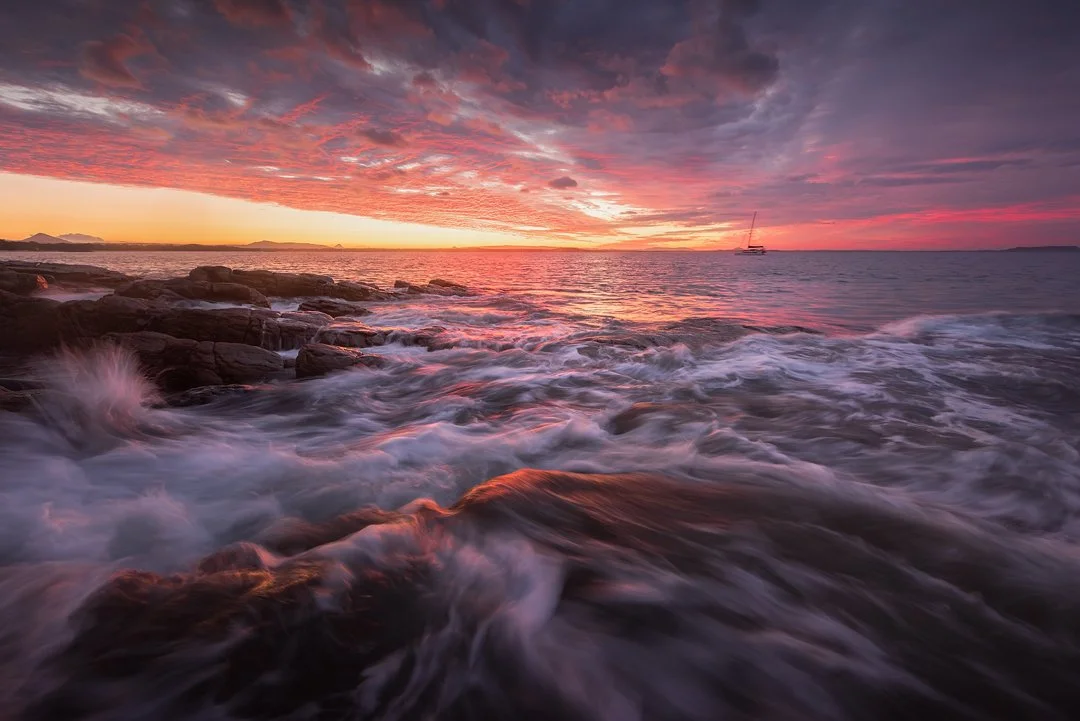
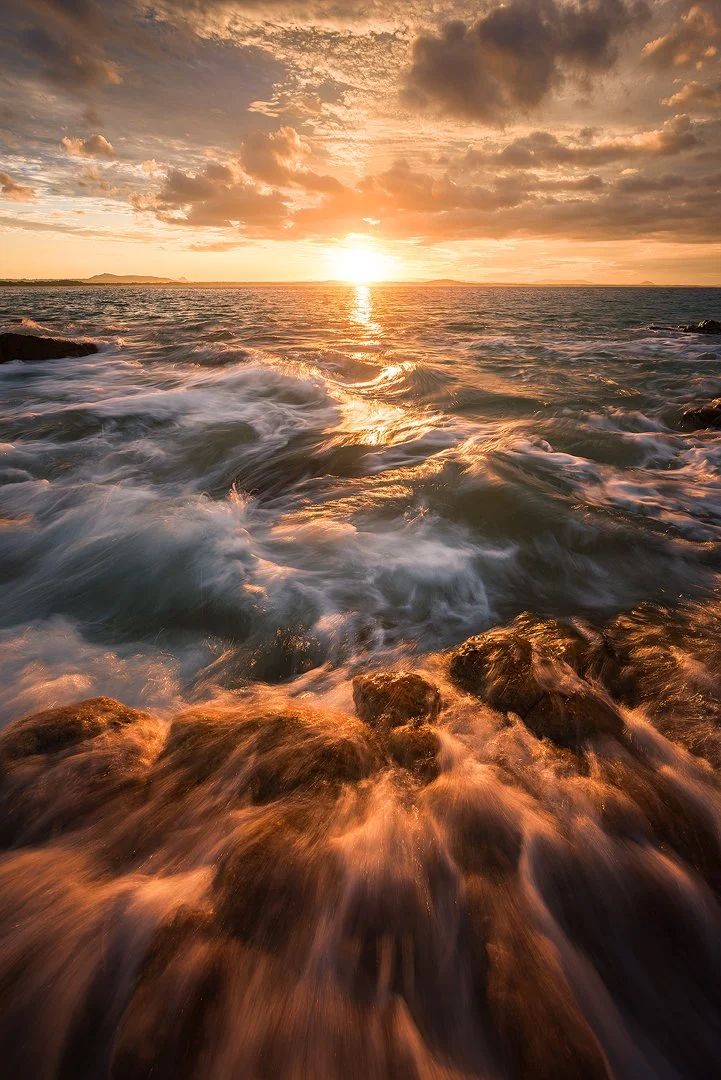
Noosa National Park Photography Workshop (17–19 April 2026)

Noosa Heads, Sunshine Coast · Queensland, Australia

Tuition-only (accommodation + transport self-booked)

A small-group, field-first workshop focused on sunrise and sunset seascapes and coastal long exposures, with daily editing + critique sessions (9:00am–12:00pm Fri/Sat/Sun) so you go home with a repeatable workflow and less guesswork in the field.

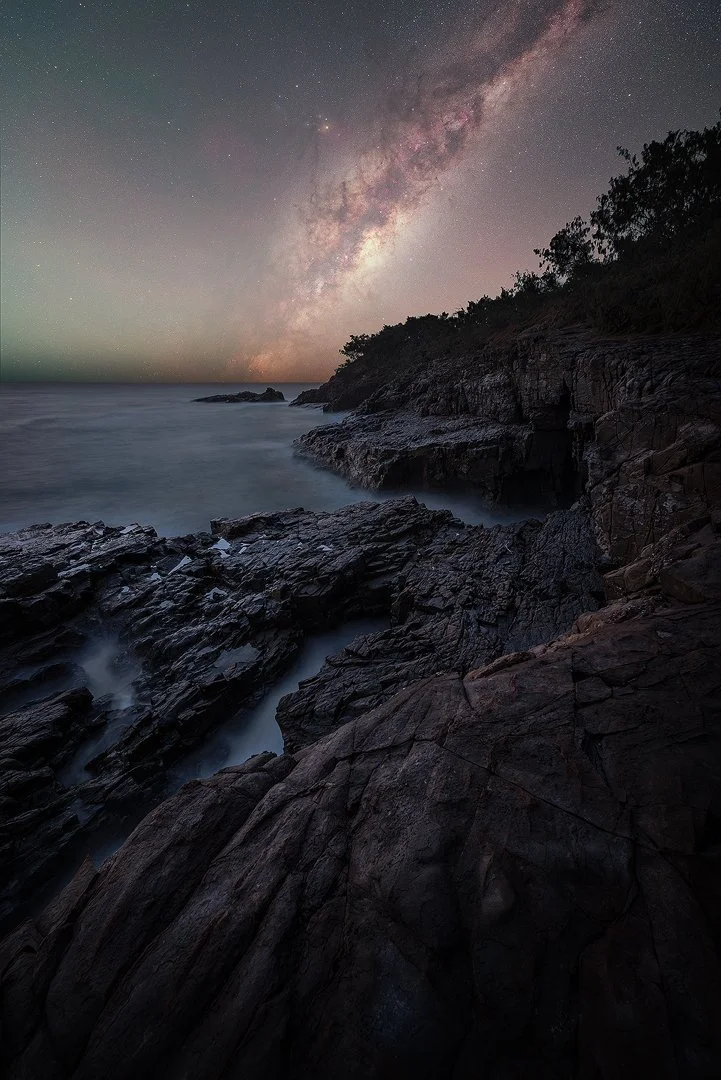
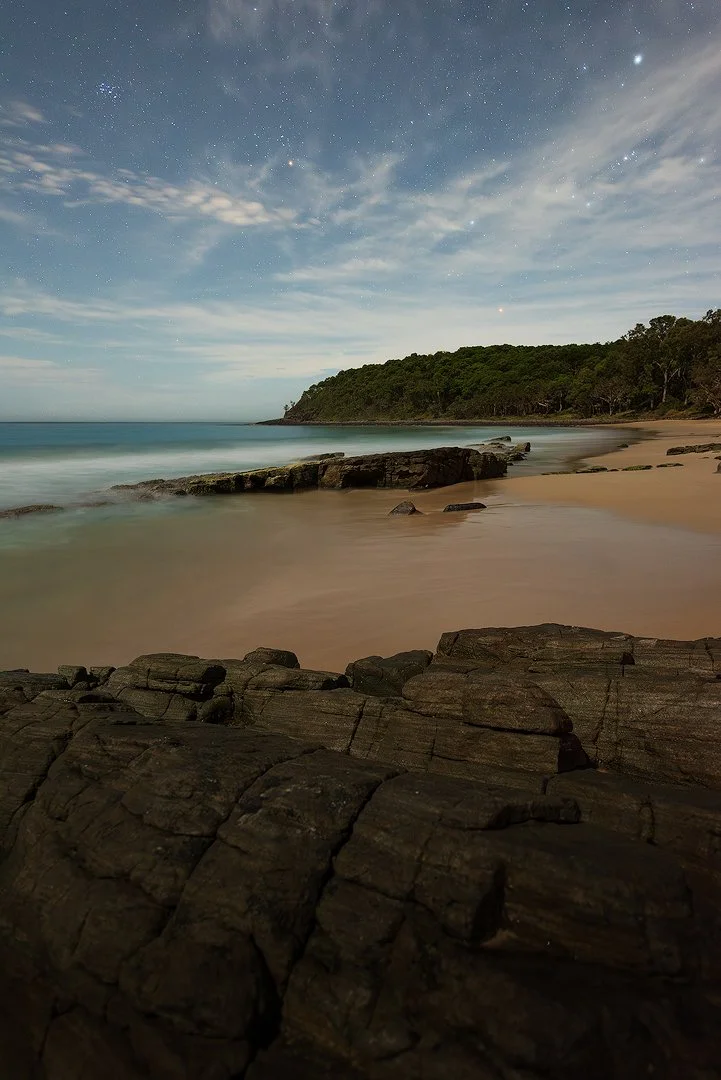
Astro is on the plan for Friday and Saturday night. If it's clear, we'll be out there to capture the Milky Way rising out of the ocean or over the headland. If astro is blocked, we still teach the full Milky Way workflow (planning, settings, blending) using downloadable RAW data in the editing sessions.

For keen beginners to intermediate photographers who want stronger coastal results and a repeatable workflow in a max-3 group.

3 days / 2 nights Max 3 participants Early Bird AU$2,150 Standard AU$2,350
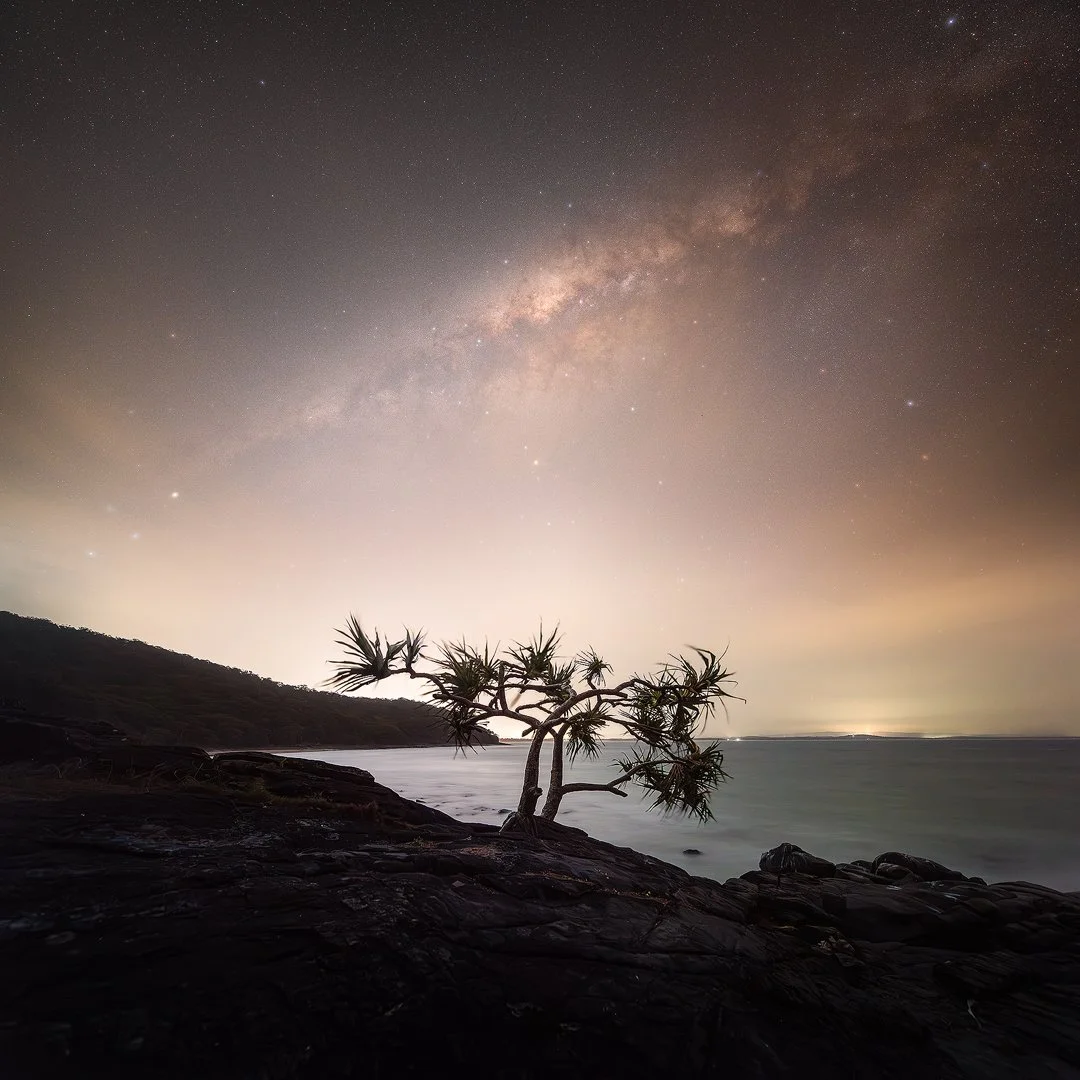
Milky Way rising over Alexandria Beach in Noosa National Park at night

This Noosa National Park photography workshop (17–19 April 2026) is a small-group, field-first weekend focused on sunrise and sunset seascapes and coastal long exposures. With a max of 3, you'll get hands-on coaching plus daily editing + critique sessions (9:00am–12:00pm Fri/Sat/Sun) to build a repeatable workflow. Accommodation and transport are self-booked.

Dates: 17–19 April 2026
Location: Noosa National Park, Noosa Heads QLD
Duration: 3 days / 2 nights
Group size: Max 3 (tuition capped)
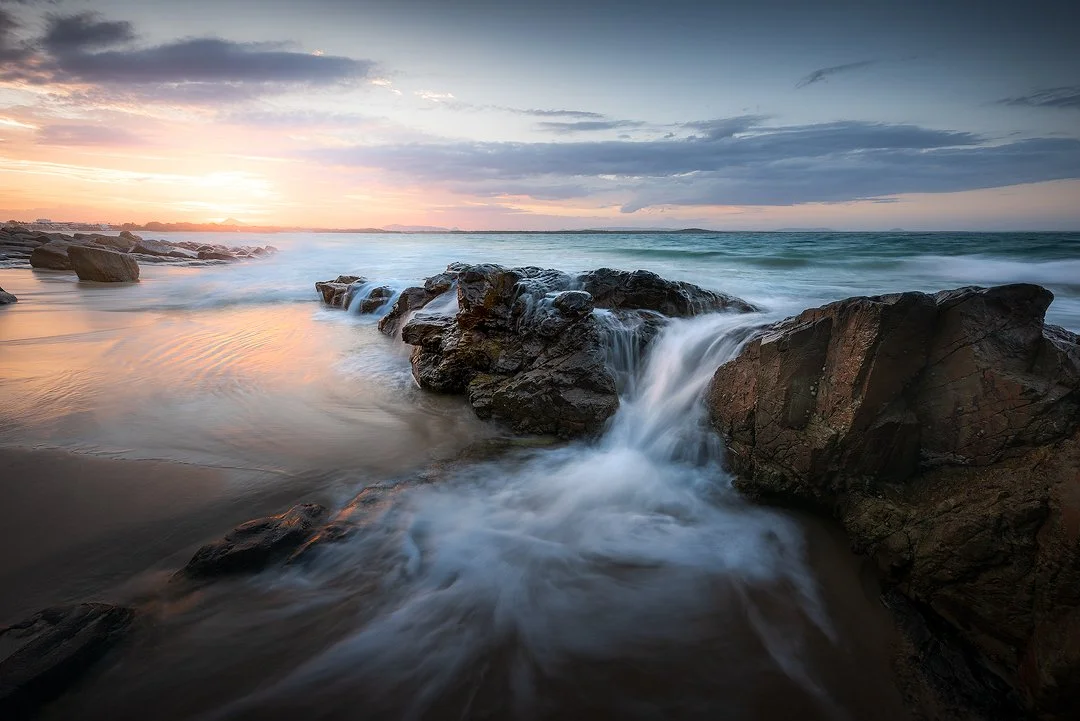
What you shoot: seascapes + headlands + long exposure
Includes: guided shoots + edit/critique (9–12 daily)
Suitability: keen beginners to intermediate
Logistics: accommodation/transport self-booked
Small-group coaching Safety-first planning $20M public liability Permits/permissions where required
Not a fit if you're not comfortable walking 1–6km on uneven headlands in low light.
Overview

Workshop snapshot

Short version: shoot hard, learn fast, and leave with a workflow you can repeat.

Focus
Coastal seascapes + long exposure

Sunrise and sunset on the headlands with technique you can repeat anywhere.

Coaching
Hands-on, in the field

Composition, settings, stability and focus checks with quick 1-on-1 help.

Editing
Daily critique (9am–12pm)

Lightroom Classic + Photoshop fundamentals for clean, natural-looking files.

Astro (if clear)
Friday + Saturday night

If it's clear, we shoot the Milky Way rising out of the ocean or over the headland. If not, we still teach the full workflow using provided RAW data in the editing sessions.

  • A results-driven workflow: plan it, shoot it clean, then finish it properly.
  • A repeatable setup for coastal long exposures, with less guesswork under pressure.
  • A practical "conditions read" process: tide, swell, wind, access, and smarter positioning.
  • A clean Lightroom workflow (plus Photoshop fundamentals where relevant).
  • Critique on your files so you know what to change next time.
  • A short practice plan so you keep improving after Noosa.
★★★★★

"The workshop clarified so many things that YouTube never could."

— Workshop Attendee
★★★★★

"Attentive and knowledgeable, tailored advice."

— Participant Feedback
★★★★★

"I came back with photos I was genuinely proud of."

— Workshop Attendee
Location

Why Noosa National Park for photography

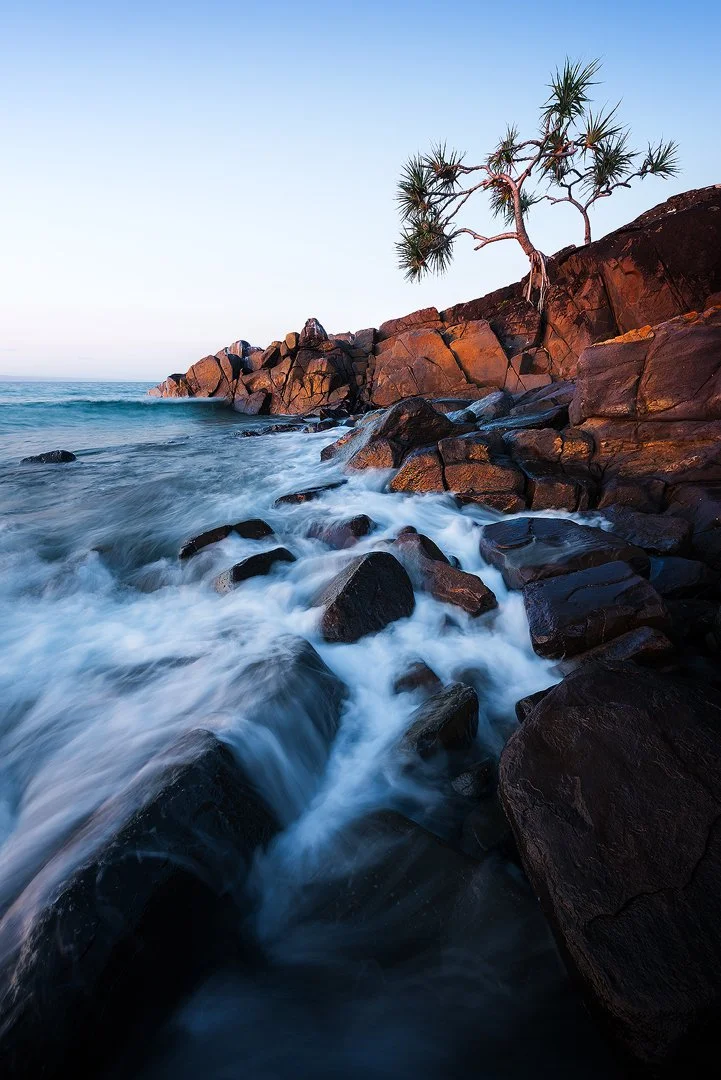
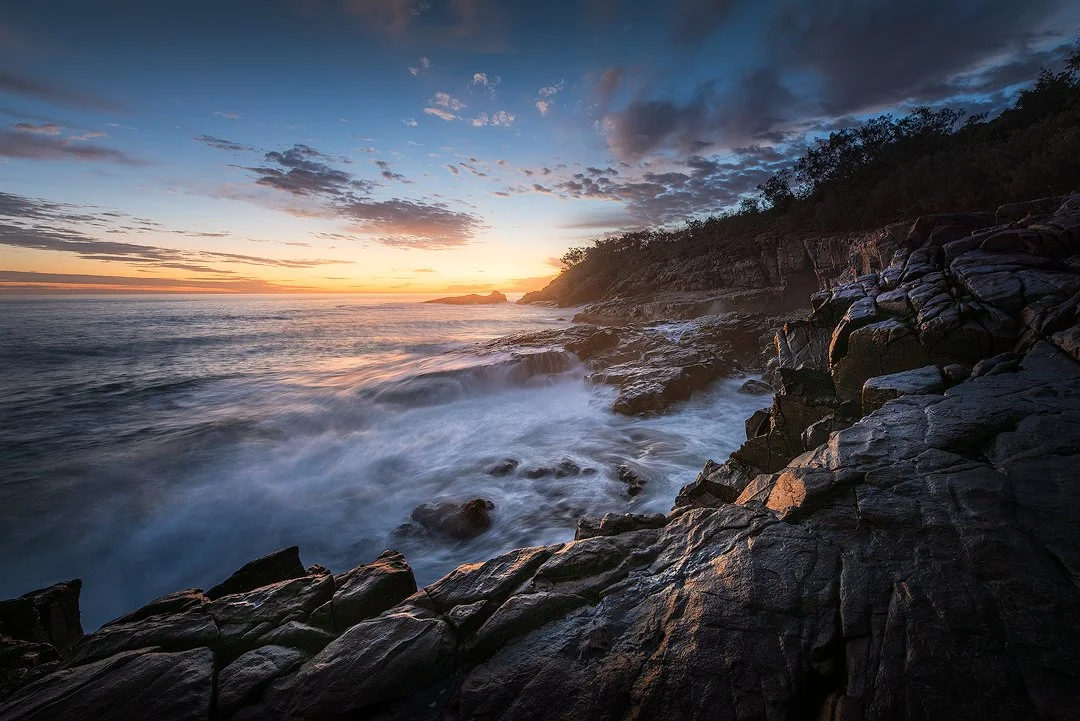
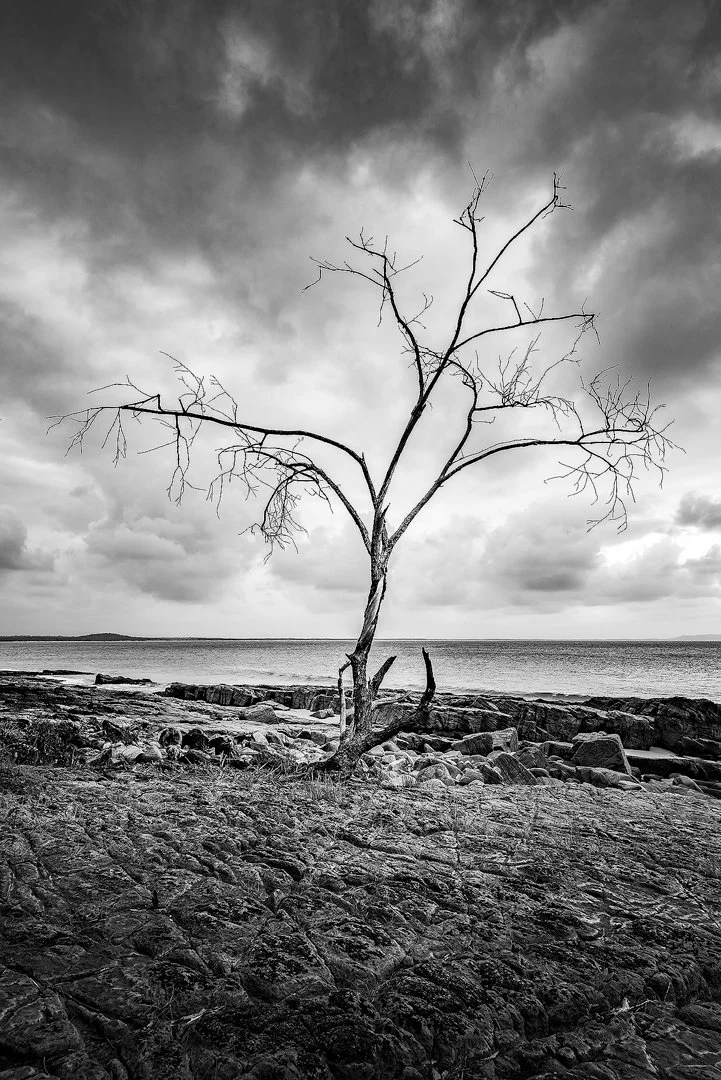
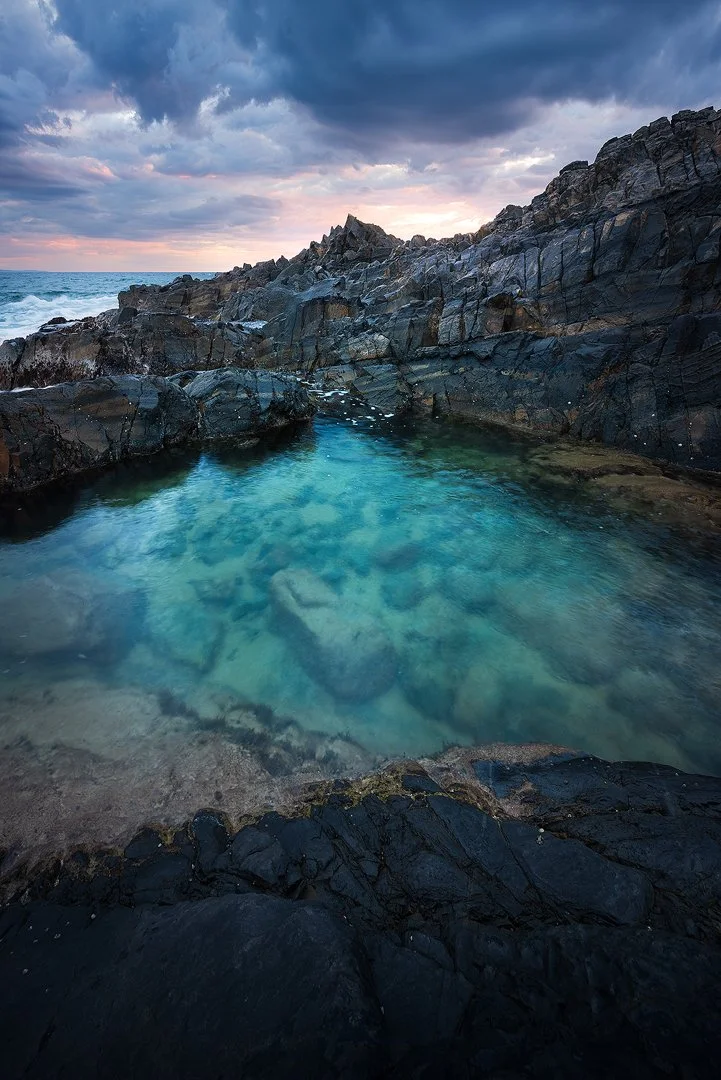
Noosa National Park's headland section packs an unusual amount of coastal variety into one tight network: sweeping ocean views, rocky bays, and enclosed beaches connected by the Coastal Walk. It's a location chosen for strong seascapes and headland compositions across a weekend, without spending half the trip driving between spots.

What you get
High variety, low travel
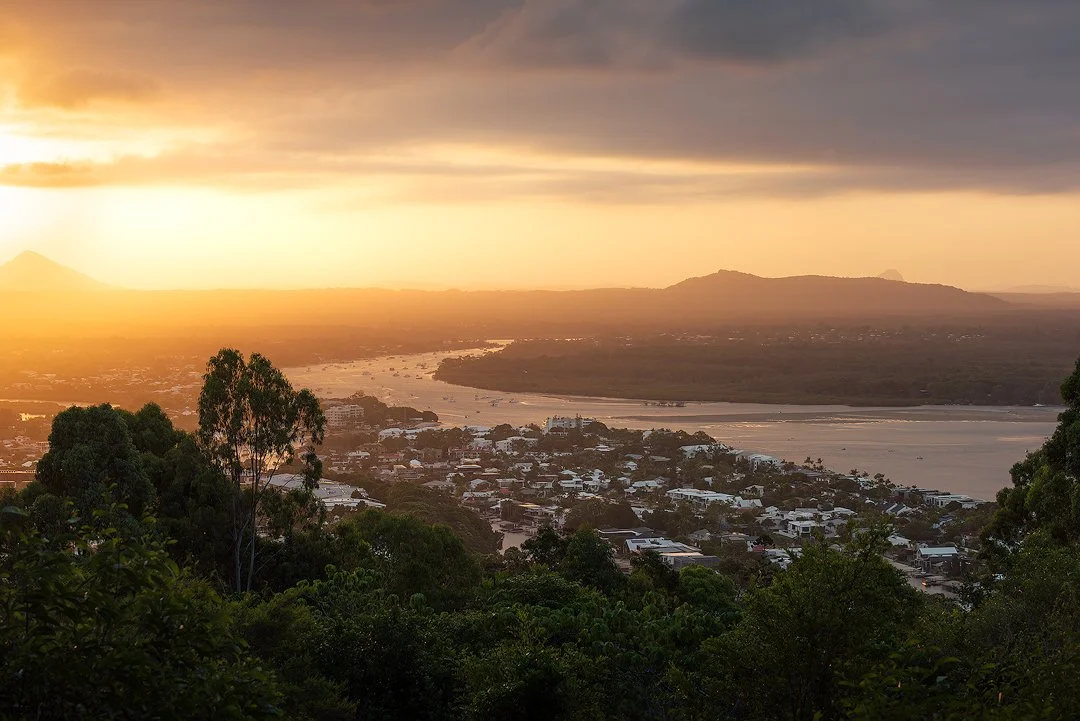
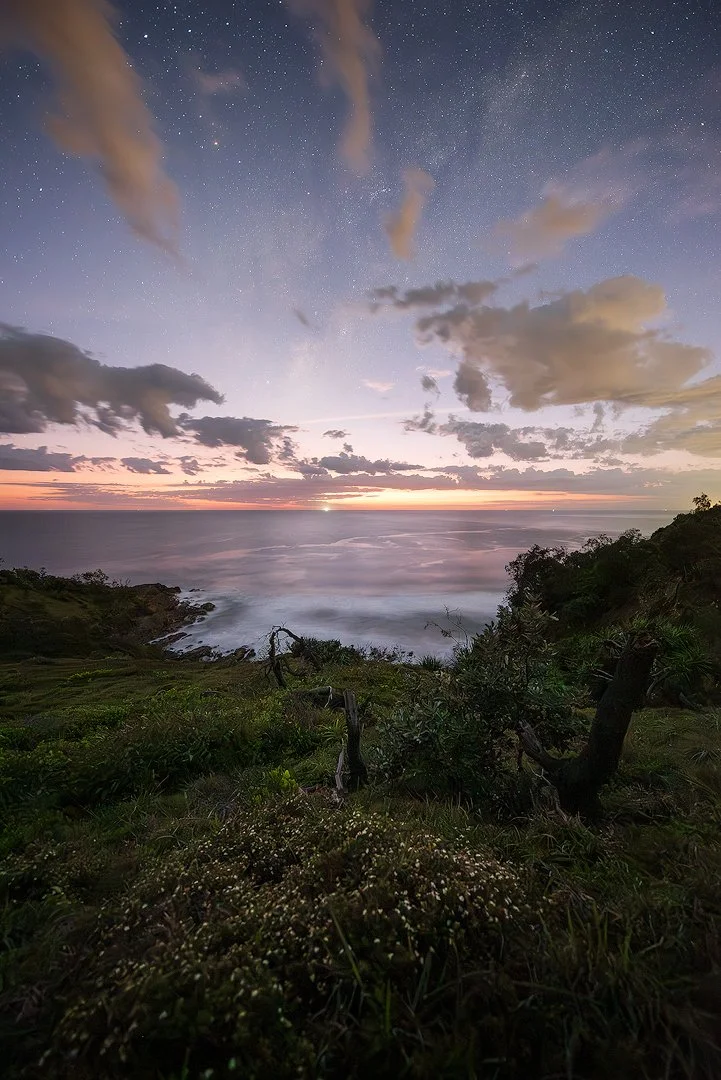
  • Headland lookouts for big, clean panoramas and layered coastlines
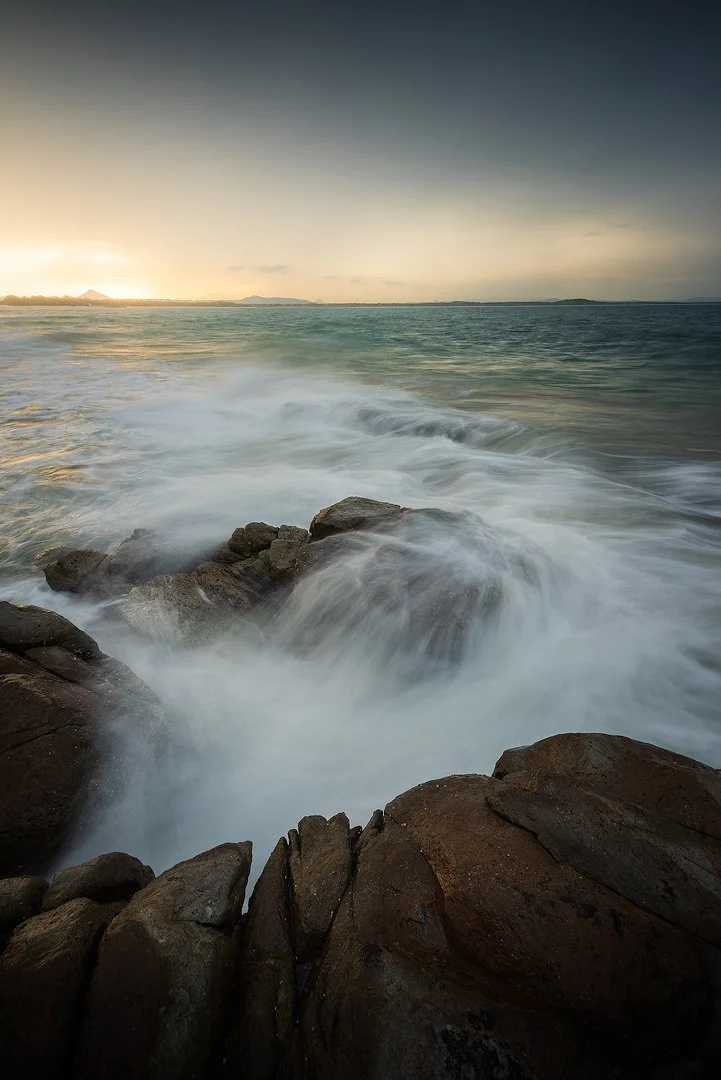
  • Rock-and-bay textures that suit long exposures at golden hour
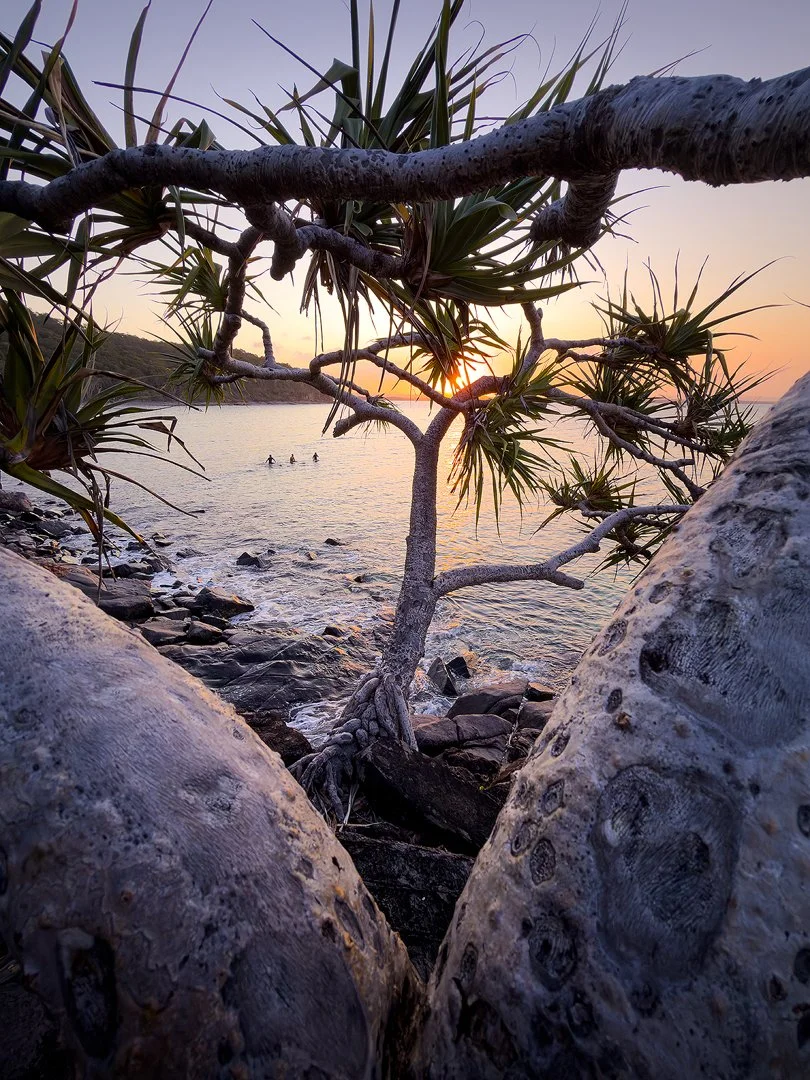
  • Pandanus-lined coves for framing and layered foregrounds
  • Wildlife opportunities may present along the headland walk
  • Short relocations between distinct scenes, so you get more reps
Why it's ideal for learning
Two golden hours, one headland

We'll make the most of the best light window available and build a repeatable coastal workflow: stable tripod technique, shutter-speed choices that match the water, and clean edits that hold detail and colour without overcooking the file.

Small group (max 3). Permits/permissions where required. Clear meet points and calm, well-briefed sessions.

What you'll practise

What you'll shoot in Noosa

Locations vary with tide, swell, wind and access. We choose the best workable option for the light and the experience.

  • Tea Tree Bay sunrise and soft light studies
  • Granite Bay textures, foregrounds and long exposures
  • Dolphin Point / headland lookouts (conditions permitting)
  • Hell's Gates drama (swell-dependent)
  • Alexandria Bay (walk + conditions dependent)
  • Golden hour exposure transitions and white balance control
  • Tripod technique for sharper long exposures
  • Sunrise + sunset landscapes: exposure blending, focus discipline, clean detail
  • Planning tools: tide/swell timing and access choices
  • Milky Way session Friday + Saturday night (if clear): rising out of the ocean or over the headland
  • Full Milky Way workflow (planning, settings, blending) taught in the editing sessions using provided RAW data

Researching the area? See 8 best sunrise, sunset & astro spots in Noosa National Park .

Schedule

Itinerary

A clear plan, with flexibility built in for weather and conditions.

Meet points are in or near Noosa Heads. Most sessions involve short drives to trailheads (typically 5–20 minutes), depending on the plan.

Day 1 — Friday 17 April: sunrise + editing (9–12) + sunset + astro (if clear)
  • Sunrise shoot (location chosen for best conditions)
  • Editing + critique session (9:00am–12:00pm)
  • Sunset shoot (conditions-led)
  • Astro session (if clear): Milky Way rising out of the ocean or over the headland.
Day 2 — Saturday 18 April: sunrise + editing (9–12) + sunset + astro (if clear)
  • Sunrise seascapes (Tea Tree / Granite Bay area)
  • Editing + critique session (9:00am–12:00pm)
  • Sunset session (headland / bay option)
  • Astro session (if clear): Milky Way rising out of the ocean or over the headland.
Day 3 — Sunday 19 April: sunrise + editing (9–12) + wrap-up
  • Sunrise session (conditions-dependent)
  • Final editing + critique session (9:00am–12:00pm)
  • Wrap-up: next steps + practice plan, then depart
Plan B

Conditions plan

Coastal workshops are conditions-led. If weather, swell, wind or access changes, we pivot calmly and keep the learning strong.

  • We adjust timing and choose a more protected location when needed.
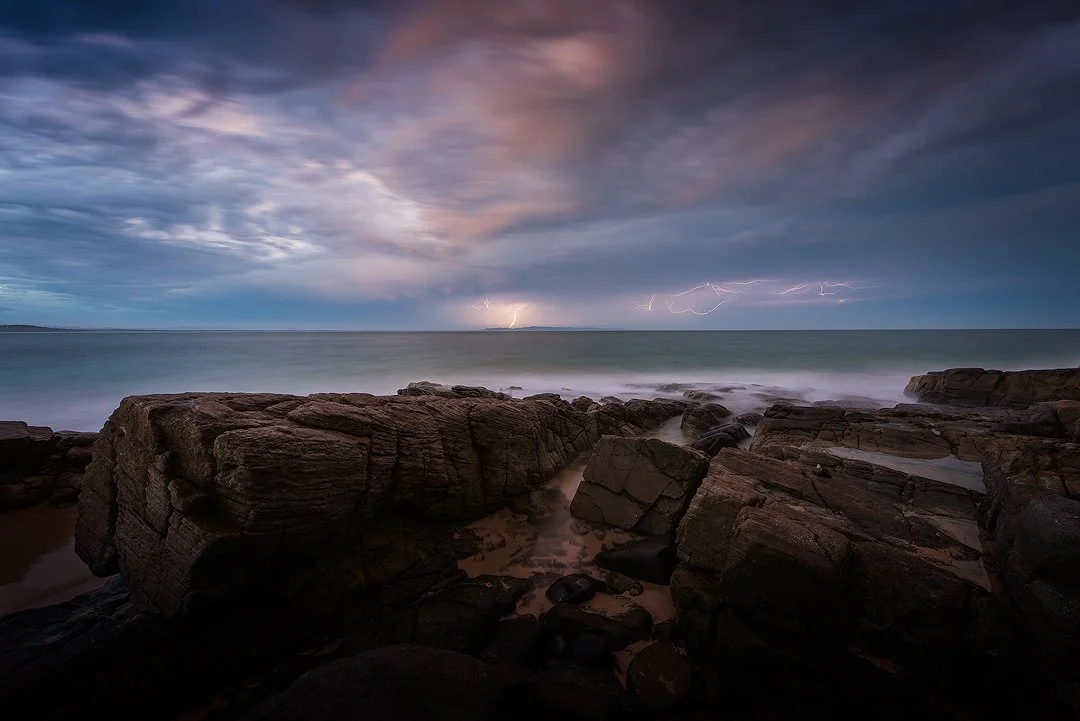
  • Cloud can be excellent for seascapes and can add mood and texture for both day and night sessions.
  • If conditions aren't safe or workable, we shift focus to technique, planning and the edit/critique sessions.
  • Safety comes first, and changes are communicated clearly with simple meet-point instructions.
Success still looks like
Real progress

We plan to shoot the Milky Way Friday + Saturday night. If cloud blocks it, you still learn the full workflow (planning, settings, blending) using provided RAW data in the editing sessions, so you’re ready for the next clear night at home.

Inclusions

What's included

Tuition is the focus, so you can choose your own accommodation and travel style.

Included
Coaching + edit/critique

Guided field sessions, daily editing + critique (9:00am–12:00pm Fri/Sat/Sun), checklists/cheat sheets, and post-workshop email support.

Note: Adobe subscriptions are not included.

Not included
Accommodation + transport

Accommodation, meals and transport are self-booked. You'll get recommendations in your pre-departure info.

We plan around safe access and conditions. We use permits/permissions where required and ask participants to follow park rules and on-site guidance.

Prep

Gear (simple checklist)

You don't need a perfect kit. Bring the basics and we'll adapt the plan to what you have.

Essentials
Bring these
  • DSLR or mirrorless camera (Manual mode + RAW recommended)
  • Wide-angle lens (helpful for seascapes)
  • Stable tripod
  • Headtorch/torch (pre-dawn starts)
  • Spare battery + memory cards
  • Closed shoes + layers (coastal wind can cut)
  • Laptop for edit/critique sessions (recommended)
Optional
Helpful extras
  • ND filter and/or polariser (useful once the light is brighter)
  • Intervalometer/remote (handy if your camera doesn't do long exposures internally)
  • Second lens (standard zoom or telephoto for tighter frames)
  • Rain cover + microfiber cloth
Do I need filters for this workshop?
No. The workshop is designed to help you shoot long exposures in lower light (before sunrise and after sunset) without relying on filters. Filters become most useful once the sun is above the horizon and you want longer exposures in brighter conditions. If you are considering filters, email me and I can provide current NiSi reseller pricing and guidance on what, if anything, is worth adding to your kit.
What Dylan uses (for reference)
  • 14–24mm f/2.8 for coastal work (and astro when it's clear)
  • 70–200mm f/2.8 + 2x converter for tighter scenes and occasional wildlife moments
  • Stable tripod + NiSi ND and polariser when conditions suit long exposures
Wider focal lengths are generally easier for headlands and seascapes without needing panoramas.

If you're considering filters or accessories before the workshop, message me early. I can usually organise participant pricing on NiSi gear where available. If you want the longer list, see My Gear List.

Cost

Pricing & booking

Progressive tiering rewards early commitment. Pricing is in $AUD.

Early Bird
First seat only
AU$2,150
Standard
Remaining seats
AU$2,350

Deposit: AU$450 to secure your spot. Balance due 30 days before the workshop (full payment if booking within 30 days).

Before booking accommodation or travel, please read the Cancellation Policy. Travel insurance is strongly recommended.

The booking page confirms current availability and the full terms: Terms & Conditions.

For a dedicated dark-sky Milky Way session in Queensland, the Noosa + Borumba Dam workshop (Sep) is the astro-first option with purpose-built inland night sessions.

Next steps

What happens after you book

So you can plan travel with confidence and turn up prepared.

  • You'll receive a pre-departure email with meeting points, timing notes, and a simple packing checklist.
  • We'll share accommodation suggestions and local logistics tips (tuition-only, so you can choose your own style).
  • As conditions evolve, we confirm shoot windows and communicate any changes clearly.
Unsure if it's a fit?
Ask before you book

If you're unsure about gear, fitness, or whether this matches your goals, email me first and I'll help you make the right call.

Contact

Safety

Safety, access & conditions

Coastal workshops are conditions-led. Safety and responsible access come first.

  • Expect walks of roughly 1–6km with uneven ground and headland sections.
  • We plan around tide/swell/wind and choose the safest workable location.
  • Bring closed shoes, a headlamp/torch, and layers (coastal wind can cut).
  • $20M public liability insurance for peace of mind (details available on request).
  • Permits/permissions are used where required for locations and activities.
  • Any night-sky session is weather/access dependent and only attempted where permitted and safe.
Proof

Testimonials

Feedback shown is from a mix of past workshops and sessions (group sizes vary by trip). Noosa April 2026 is max 3.

★★★★★

"Even with the constant rain, Dylan kept me up to date and gave me peace of mind. The workshop clarified so many things that YouTube never could."

— Workshop Attendee
★★★★★

"Dylan was an attentive and knowledgeable instructor. He made sure to check on all photographers and provided tailored advice."

— Participant Feedback
★★★★★

"I came back with marvellous photos and newfound confidence."

— Workshop Attendee
★★★★★

"The follow-up resources were a terrific way to reinforce the weekend."

— Participant Feedback
FAQs

Direct answers

Common questions that usually decide it.

What are the dates and when are the editing sessions?
The workshop runs 17–19 April 2026 (Friday to Sunday). Editing and critique sessions are held from 9:00am to 12:00pm each day. These sessions are structured, practical and directly linked to what we capture in the field. We review planning, file selection, exposure decisions and finishing techniques so you leave with a clear, repeatable workflow, not just a collection of images.
Is astrophotography included?
Yes. Astro is on the plan for Friday and Saturday night. If it's clear, we'll be out there to capture the Milky Way rising out of the ocean or over the headland.

If astro is blocked, we still teach the full Milky Way workflow—planning, camera settings, focus, and blending—using downloadable RAW data I provide in the editing sessions.
Do I need to know Manual mode?
No. If you can adjust ISO, shutter speed and aperture, or are willing to learn, we build the process step by step. With a maximum of three participants, you receive direct guidance in the field. We focus on understanding exposure decisions rather than memorising settings, so you leave confident applying the workflow independently.
Who is this workshop for?
This workshop is suited to keen beginners through to intermediate photographers who want stronger coastal images and a reliable, repeatable planning and shooting workflow. If you feel unsure about settings or night photography, that is completely fine. We tighten fundamentals quickly in the field and build from there in a structured, practical way.
Do I need a laptop for the editing sessions?
A laptop is strongly recommended. You will gain the most value by editing your own files in Lightroom Classic and Photoshop during the sessions. Working on your own images allows you to apply the exact planning and capture decisions we discuss in the field. Adobe subscriptions are not included.
Do you operate with permits/permissions and insurance?
Yes. We operate with permits and permissions where required and plan around current access rules. Location requirements can change, so access is verified with official sources before each workshop. Dylan Knight Photography maintains $20 million public liability insurance for approved workshops and activities. Details are available on request.
Are drones part of the workshop?
No, drones are not part of the structured workshop program. If you choose to fly independently outside scheduled workshop time, you are responsible for complying with current CASA regulations and any site-specific restrictions. Some locations may prohibit drone use entirely.
What if it's cloudy, raining or the swell is unsafe?
Conditions guide our decisions. Cloud can be excellent for seascapes and can add texture and mood for both day and night sessions. If rain, wind or swell create unsafe access, we pivot to alternative locations, adjust timing or focus on technique and planning sessions. Safety comes first and we never force risky access.

If astro is not workable, we still teach the full Milky Way workflow using downloadable RAW data in the editing sessions. The learning outcome stays strong regardless of conditions.
Are filters required?
No. Filters are not mandatory for this workshop. You can create strong results without them and we discuss when they are useful versus optional. If you are considering filters, email me and I can provide current NiSi reseller pricing and guidance on what, if anything, is worth adding to your kit.
What's the cancellation / refund policy?
Please read the Cancellation, Reschedule & Refund Policy before booking travel. In summary, cancellations made 60 or more days before the Start Date are typically refunded less a A$100 admin fee. Cancellations 30 to 59 days prior are typically refunded at 50 percent. Within 30 days, fees are generally non refundable unless your seat is filled. Full details are available in the published policy and Australian Consumer Law rights apply.

Still unsure? Browse the full Photography Workshop FAQs.

Small-group tuition (max 3) · 17–19 April 2026 · Locations are conditions-led for safety and learning.
© 2026 Dylan Knight Photography · Sunshine Coast, QLD · Owned and operated by Dylan Knight Photography

Testimonials

★★★★★

"Dylan has put a lot of time and effort into this workshop. He is easy to understand and ensures each student gets the time they need to grasp the concepts. I really appreciated that there were only four students—Dylan spent plenty of time with each of us. The follow-up eBooks he created and published are a terrific way to reinforce the weekend and make sure the new techniques and knowledge really stick. Thank you Dylan—I really enjoyed the weekend and can’t wait to see what’s next."

– Jo

★★★★★

"Highly recommend Knighty’s Photography! You won’t be disappointed! I’ve done a few private workshops with Dylan over the last five years and it’s been great! Looking forward to my next workshop with Dylan!"

– Wendy K.

★★★★★

"Knighty's Astro photography session was an amazingly transformative and immersive experience as a beginner photographer... I came back with marvellous photos and newfound confidence."

– Amber

★★★★★

"I was absolutely stoked with the workshop... Dylan clarified a lot of the questions I had. Would love to do this again!"

– Workshop Participant

★★★★★

"Dylan was an attentive and knowledgeable instructor who was prepared to put in extra time... He made sure to check on all photographers and provided tailored advice."

– Participant Feedback

★★★★★

"The workshop was excellent. Dylan was very knowledgeable and professional. He went over and above to ensure we all had a great experience."

– Nikon School Attendee

★★★★★

"Even with the constant rain, Dylan kept me up to date and gave me peace of mind. The workshop clarified so many things that YouTube never could. Highly recommended!"

– Workshop Attendee

★★★★★

"I would highly recommend a Nikon School Workshop and Dylan Knight. He followed up with extra resources and provided a professional experience from start to finish."

– Nikon Workshop Participant