Field-to-Edit Photography Intensive
The workshop doesn’t end when the shutter closes.
Build stronger photographs through the complete process: planning, capture, review and a finished Lightroom and Photoshop edit. Across two full days, you’ll photograph at sunrise, sunset and during one conditions-led night-sky session, then work through two face-to-face three-hour editing blocks using your own images.
Tuition-only · Self-drive · Payment plans available on request
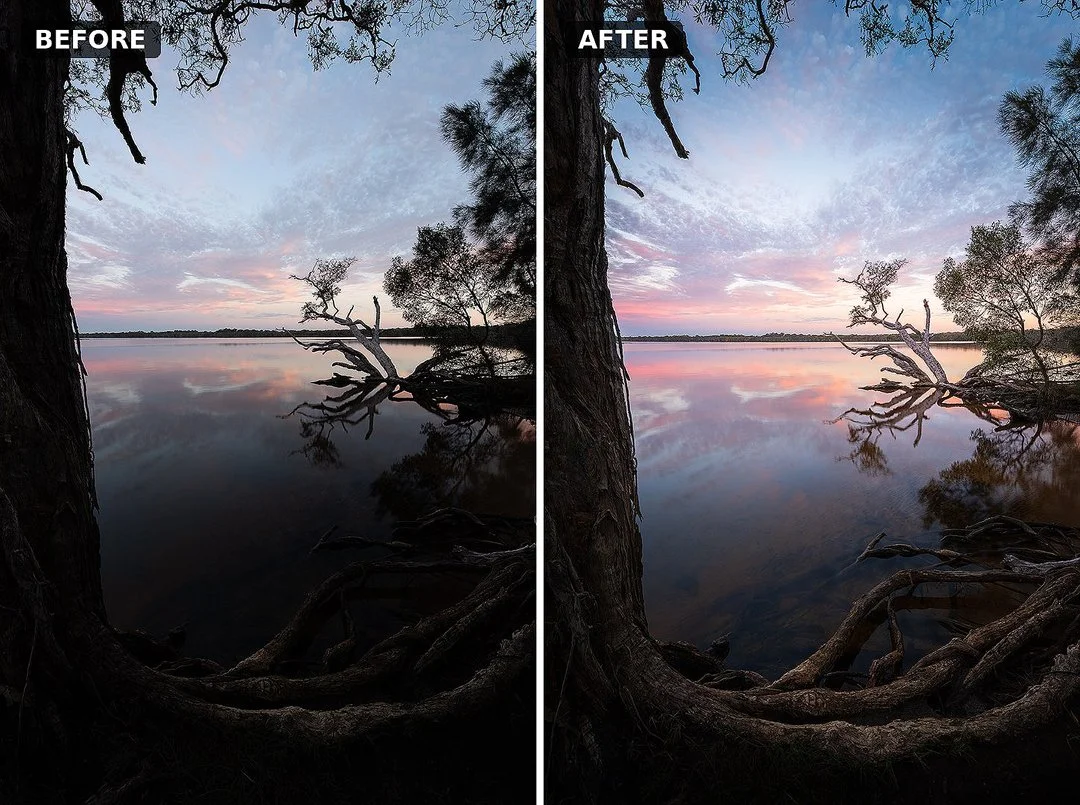
A strong capture is only the beginning.
Real before and after · No exaggerated starting fileThe aim is not to manufacture a dramatic transformation. It is to understand what the file needs, protect what already works and make deliberate decisions from capture through to completion.
- Build the best possible starting file in the field
- Choose the strongest frame instead of editing everything
- Work through a structured Lightroom and Photoshop process
- Apply the feedback again while the learning is still live
Most workshops stop at capture. This one completes the loop.
This is not a photo tour and it is not two days of collecting RAW files to deal with later. You plan the frame, make the technical and creative decisions in the field, review what worked, carry your own images through a finished edit, then return to the field with specific corrections you can apply immediately.
Learn the whole process, not isolated camera settings
Every session feeds the next. The aim is not just to help you produce strong images during one weekend. It is to build a workflow you can repeat independently in unfamiliar locations and changing conditions.
Read the location, light, weather, tide, moon and likely composition before the camera comes out.
Make deliberate choices around composition, exposure, focus, filters, timing and foreground strategy.
Select the right frame and build a clean Lightroom and Photoshop workflow around your own files.
Apply the feedback at the next session so the improvement is tested in the field, not left as theory.
What past participants say
Real feedback from recent Dylan Knight Photography workshops.
“The small class size made such a difference. His patience and genuine passion for helping others improve is what really stood out. I walked away feeling far more confident using my camera, especially in low-light and night conditions.”
“I've done quite a few workshops with Dylan now, and I keep coming back for good reason. The planning that goes into finding the right locations at the right time for the best light is exceptional. And the Milky Way sessions? Absolutely fantastic.”
“Before the workshop, my approach was simple — just take the shot. Now it's all about planning, preparation and waiting for the light. Understanding light as the most fundamental element of composition was the real revelation.”
Two full days built around the strongest light
The usual format is Friday and Saturday. Exact locations and timing flex around seasonal light, tides, weather, Milky Way alignment, permit conditions and the group's energy. The framework is fixed; the order is not.
Capture, review and refine
The first day establishes the workflow and gives us enough time to apply it again under different light.
- Possible early-Friday astro window from 12:01 am when it is clearly the strongest option
- Sunrise or morning field session
- Breakfast and recovery break
- Three-hour face-to-face Lightroom and Photoshop editing block in a comfortable, air-conditioned indoor venue
- Protected midday rest and evening planning
- Sunset field session, with astro afterwards only when selected as the best window
Apply the feedback and finish strong
The second day is where the learning locks in. You return to the field with specific corrections from the first day's images.
- Sunrise or morning field session
- Breakfast and recovery break
- Second three-hour face-to-face Lightroom and Photoshop editing and critique block in a comfortable, air-conditioned indoor venue
- Protected midday rest
- Final sunset field session
- Saturday astro when it is the strongest seasonal and weather window
Up to three possible night-sky windows. One selected session.
One conditions-led night-sky session is selected from up to three possible windows, if clear conditions allow. During Galactic Core season, the session targets the Milky Way Core when alignment and conditions suit. Outside core season, it shifts to seasonal subjects such as Orion, the anticentre Milky Way, star trails or tracked nightscapes. The final window is chosen around sky alignment, cloud forecast, moon, location and participant fatigue.
We use the best window, not all three. If an early-Friday session is selected, the following program and rest periods are adjusted so the group is not simply pushed through a stacked schedule. The night-sky session remains conditions-dependent and is never guaranteed.
You do not go home with a folder of problems.
Editing is built into both days through two face-to-face three-hour Lightroom and Photoshop blocks held in comfortable, air-conditioned indoor venues. You work on your own images while the location, light and decisions are still fresh, with the process demonstrated live and direct feedback as you apply it. You also take home the complete 11-video DKP Editing System, covering the workflow from basic foundations through to advanced editing, so you can repeat the process after the workshop.
Editing covers
- Choosing the strongest frame instead of editing everything
- RAW preparation and an efficient Lightroom starting point
- Local adjustments, colour, contrast and tonal control
- Photoshop workflow where the image requires it
- Seascape, waterfall, landscape and astro-specific decisions
- Finishing for screen, print and portfolio use
- Ongoing access to the 11-video DKP Editing System, from basic to advanced editing
One proven format, adapted to the strongest seasonal conditions.
The Field-to-Edit Intensive is the stable product. The location and dominant photographic focus rotate so each date can use the strongest seasonal conditions, approved access and night-sky alignment. Exact inclusions are listed on each date before you book.
Sunrise and sunset light, wave timing, filters, foreground control, exposure blending and coastal safety.
Weekday-access mountain and waterfall options, telephoto compression, polariser work and complex natural light.
Daylight composition carried into night, reliable focus and exposure, foreground strategy, and processing for the Milky Way Core or other seasonal night-sky subjects.
Why most editions run Friday–Saturday
Friday opens access to weekday-restricted hinterland and national-park locations, while a Saturday-night finish leaves Sunday free for sleep, travel and returning to work on Monday. Selected coastal editions may run Saturday–Sunday when weekday access is not required. The product page for each date states the exact format plainly.
What you'll come home with
- A repeatable process for planning, capturing and finishing landscape images
- Stronger composition and a clearer reason behind every technical choice
- A practical Lightroom and Photoshop workflow built on your own files
- Direct feedback on the habits currently limiting your images
- Greater confidence adapting when the forecast or location changes
- A small set of properly developed images rather than a hard drive full of unfinished RAW files
Who this is for
- Keen beginners through to experienced photographers refining their complete workflow
- Photographers who want hands-on coaching, not a large group or passive demonstration
- Anyone serious enough to work through early starts, field decisions and editing
- People who want to understand the process so they can repeat it without Dylan beside them
Not a fit if…
- You want a casual guided tour with the camera set up for you
- You expect fixed weather, guaranteed astro or a rigid itinerary regardless of conditions
- You do not want to bring a laptop or take part in the editing process
What's included
A compact premium workshop with the full teaching system, without the accommodation and transport load of a destination trip.
Included
- Two full days of landscape photography tuition
- Up to two sunrise and two sunset field sessions, adjusted around conditions and rest
- One conditions-led night-sky session selected from up to three possible windows, if clear conditions allow
- Two face-to-face three-hour Lightroom and Photoshop editing blocks using your own images, held in comfortable, air-conditioned indoor venues
- The complete 11-video DKP Editing System, from basic foundations through to advanced editing, included to take home
- Maximum four photographers
- Individual objectives captured before the workshop
- Direct field coaching, image critique and tailored next steps
- Pre-workshop planning, equipment guidance and conditions updates
- Post-workshop email support
- Relevant permits, permissions and AU$20 million public liability insurance
Not included
- Accommodation; book Thursday and/or Saturday night when required by your travel plans
- Meals, drinks and personal expenses
- Transport; the workshop is self-drive with clear meeting points and convoy plans where useful
- Adobe Creative Cloud subscription
- Guaranteed night-sky visibility, the Galactic Core or specific weather conditions
Before each date
- Exact location pool and edition focus shown before booking
- Gear and clothing checklist supplied
- 48–24 hour conditions update with the current Plan A and Plan B
- Clear meeting points and driving instructions
Gear you'll need
- Camera with manual controls; any brand is welcome
- Sturdy tripod for long exposure and night work
- Wide-angle lens; a standard zoom and telephoto are useful where available
- Spare batteries, memory cards and lens cloth
- Headtorch with red mode for low-light sessions
- Laptop with Lightroom Classic; Photoshop strongly recommended
- Closed footwear with grip, weather layers, food and water
Fitness and access
The exact terrain varies by edition. Expect natural outdoor surfaces, steps, sand, wet or uneven ground, low-light walking and periods standing with your camera and tripod. Some hinterland editions may include a sustained uphill track.
You do not need to be an experienced hiker, but you must be able to move independently while carrying your own equipment. Any material terrain or fitness requirement is stated on the individual date. Email before booking if you have mobility, balance, fitness or access concerns.
Pricing
- AU$1,250 per photographer at launch
- Maximum four photographers
- Payment plans available on request
- Future editions may be repriced after the launch format is proven
Before you commit
This is a teaching-intensive weekend for photographers who want to make and finish their own work. Questions before booking are welcome; Dylan will tell you plainly whether the location, terrain and format suit your goals.
All participants read and acknowledge the Participant Risk Acknowledgement as part of booking.
Terrain, timing & access
FAQs
Direct answers before you book.
Is this a two-day or three-day workshop?
Does the early-Friday astro window mean we shoot all night and continue without rest?
What will we photograph during the night-sky session?
Why does the workshop usually run Friday and Saturday?
How is this different from the four-day Sunshine Coast workshop?
Is the itinerary fixed?
How much editing is included?
Do you take the photograph or set the camera up for me?
Do I need to be advanced or know manual mode?
Is accommodation or transport included?
What if the weather is poor?
Are permits and insurance in place?
Can I use a payment plan?
Make the photograph. Finish it properly.
Two full days of small-group field tuition and guided editing, from planning and capture through to the finished image.