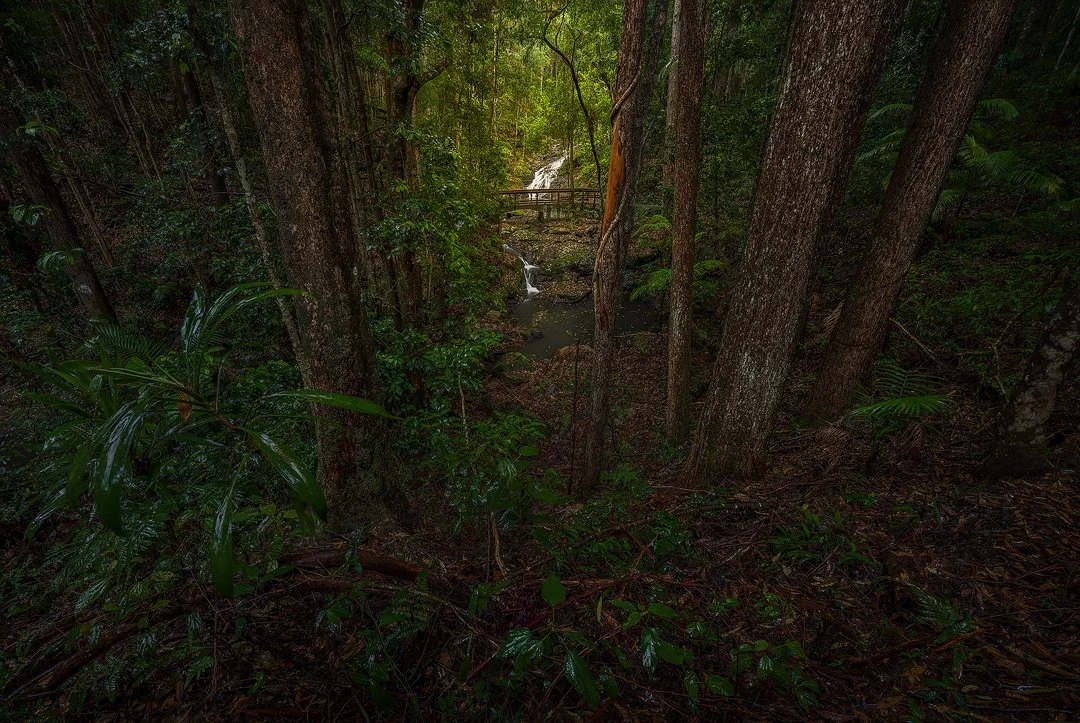
Waterfall Photography Masterclass
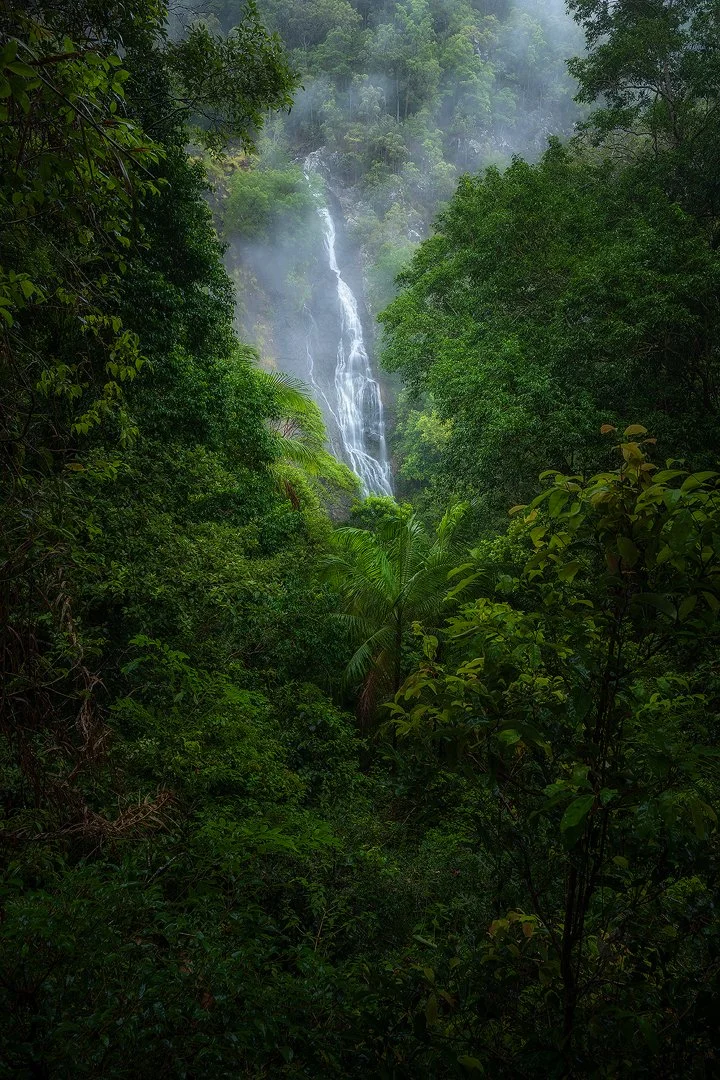
Learn how to photograph and edit waterfalls with control, from composition and shutter speed through to filters and final processing. A practical three-hour field workshop for photographers who want to stop guessing and understand how to capture moving water deliberately.
Terrain & access
How it works: this is one evergreen masterclass run at approved South-East Queensland locations, with the confirmed date and meeting point shown at checkout. Only live dates appear as selectable options. A location may change because of rainfall, water flow, closures, access or safety conditions, and any change is made to keep the session safe and the learning strong. Your rights under the Australian Consumer Law apply regardless.
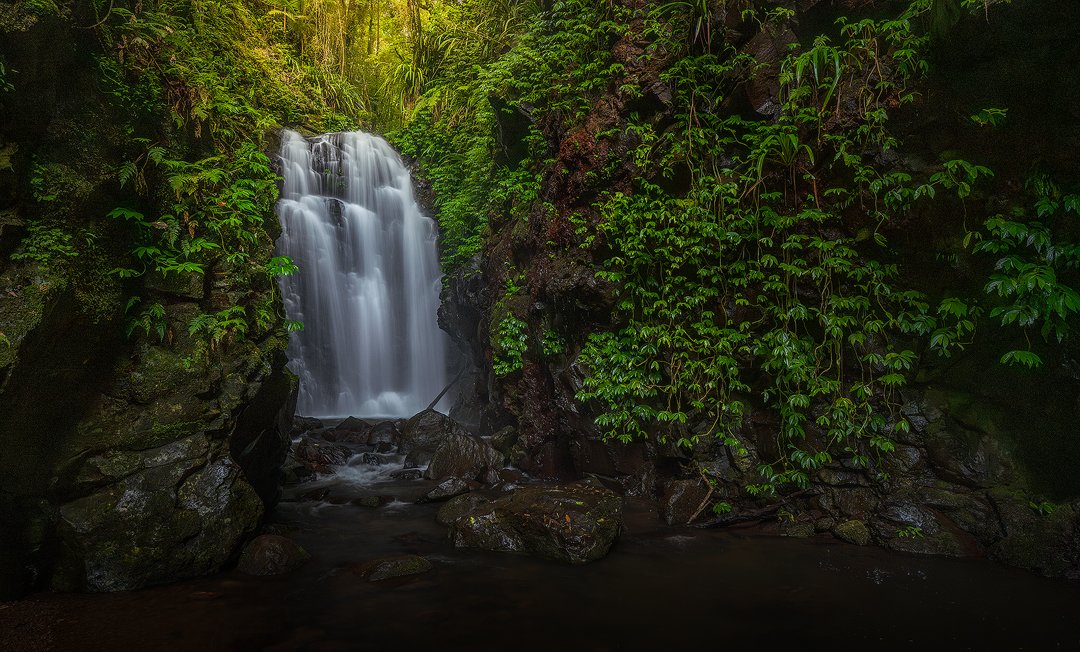
Want to see the kind of images this masterclass produces? Take a look through the gallery.
Waterfall photography is more than making the water smooth
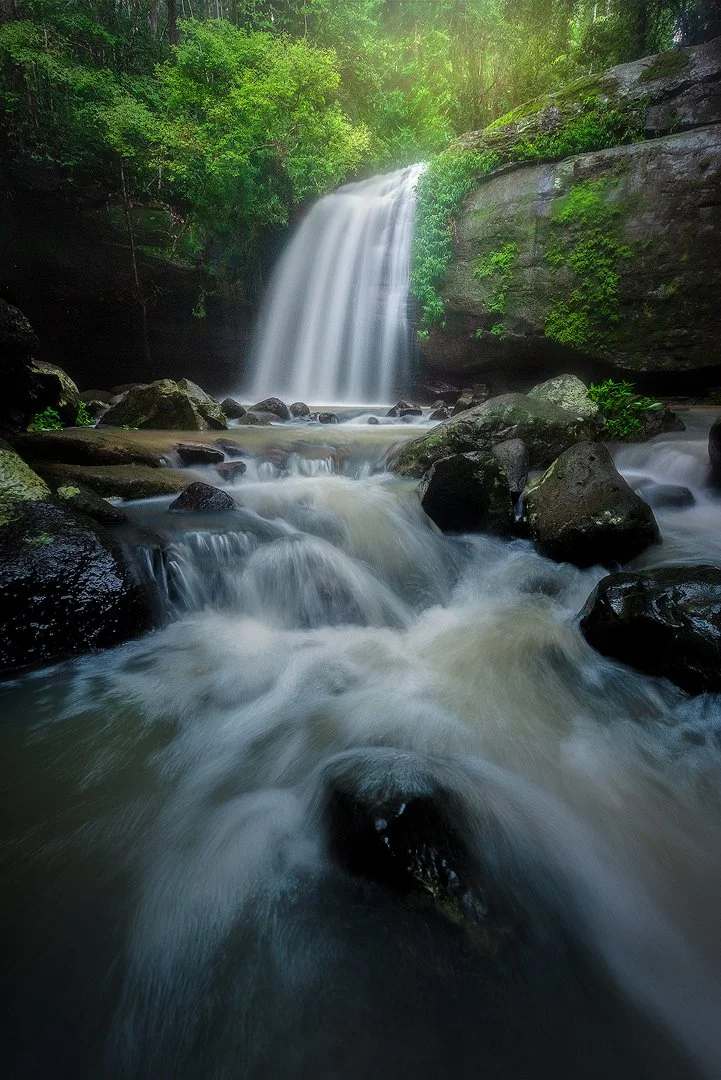
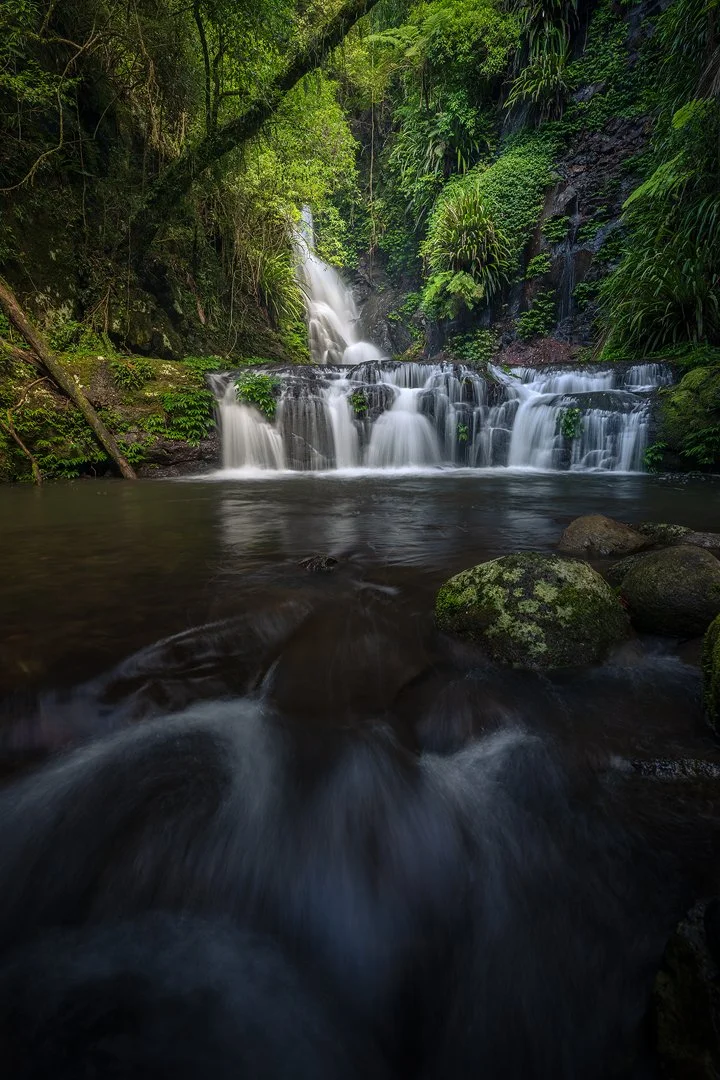
Different shutter speeds completely change the feeling of a waterfall. A shorter exposure keeps movement and texture. A longer exposure creates softer, smoother water. Neither is automatically better. You will learn how to choose the result first, then select the shutter speed, composition and filters needed to create it.
Who this is for
- Photographers who want to improve their waterfall and rainforest images
- Anyone who is unsure which shutter speed to use and wants to stop guessing
- Photographers who want to understand polarisers and ND filters properly
- People who want to finish their photographs through editing, not just capture them
You should be comfortable…
- Changing aperture, shutter speed and ISO on your own camera
- Moving across natural, uneven terrain for a few hours
Interchangeable-lens cameras are recommended.
What you'll learn
- Control the water: shoot the same scene at different shutter speeds and understand which treatment suits the flow
- Use filters deliberately: why a polariser matters around wet rock and foliage, and when an ND filter is genuinely needed
- Read the light: work with the conditions of a closed rainforest canopy
- Build compositions: simplify busy scenes and use the water to lead the eye
What you'll take home
- A repeatable process for reading a waterfall scene and capturing it correctly
- An edit workflow you can apply to your own files
- The full Waterfall Editing Course to revisit at your own pace

Straight out of camera, no editing. The polarised frame cuts glare off the wet rock, foliage and water surface. That reflected light can't be recovered later, so the unpolarised frame stays harsh and flat and is much harder to edit. This is why the filter goes on before the shutter, not in post.
Editing course included: every photographer receives the Waterfall Editing Course, with complete editing examples you can stream or download and revisit whenever you need them. Work through it using your own photographs from the session. The videos will cover: preparing and balancing the RAW file; controlling greens, reflections and colour; recovering detail in bright water; local adjustments and selective editing; building depth and directing attention; choosing the strongest shutter-speed treatment; and finishing and exporting the image.
What's included
- Three-hour practical field workshop
- Maximum four photographers
- Individual instruction and image feedback
- Shutter-speed and filter demonstrations
- Composition guidance
- Waterfall Editing Course (stream or download)
- Waterfall Photography Field Guide
- Pre-workshop equipment checklist
- Personal gear recommendations
- Ongoing support with your workshop images
Not included
- Camera equipment, filters and tripod
- Transport to and from the location
- Meals and drinks
- Personal or travel insurance
Personal gear support
You will receive an equipment checklist before the workshop and personalised advice on your camera, lenses, tripod and filters, so you arrive with the right setup for the conditions.
The two essentials, and how I can help: a sturdy tripod and a polariser are non-negotiable for waterfall work, and an ND filter helps when you want a longer exposure. Dylan Knight Photography is an authorised reseller for Leofoto tripods and NiSi filters, so you can be matched to the right tripod, polariser, ND filter or holder for your exact camera and the way you shoot. There is no obligation to buy anything. The point is the right gear, not more gear.
Approved locations
One masterclass, delivered at the best available classroom for the conditions. Approved South-East Queensland locations include:
- Kondalilla National Park (Sunshine Coast hinterland)
- Buderim Forest Park (Sunshine Coast)
- Lamington National Park (Gold Coast hinterland)
- Springbrook National Park (Gold Coast hinterland)
- Further approved locations added over time
The confirmed location for each date is shown at checkout. A location may change because of rainfall, water flow, closures, access or safety conditions.
Booking & conditions
- AU$299 per photographer, payable in full at booking
- Choose your date and confirmed location at checkout
- Light rain can create excellent rainforest conditions, and the session runs when access, tracks and weather remain safe
- If conditions make a location unsuitable, the session may move to another approved location or be rescheduled under the booking terms
Your rights under the Australian Consumer Law apply regardless. Full cancellation policy
FAQs
Direct answers before you book.
How fit do I need to be, and what terrain should I expect?
You do not need to be an experienced hiker, but you should be comfortable moving independently across natural terrain and staying on your feet for a few hours while carrying your own camera and tripod. Please contact Dylan before booking if you have any mobility, balance, fitness or access concerns, or require adjustments.
Review the Terrain and Access section above before booking. Where required for a location, participants may also be asked to read and acknowledge the Participant Risk Acknowledgement as part of the booking requirements.
Do I need a polariser or an ND filter?
What if I don't own the recommended filters?
What happens if the weather or water flow is unsuitable?
Will the workshop run in rain?
Can I bring a friend or partner?
Is the editing course included permanently?
Learn the complete waterfall workflow
Stop guessing shutter speeds. Learn how to read the scene, choose the treatment, use filters deliberately, build stronger compositions, and finish your photographs at home. Three-hour field masterclass, maximum four photographers, editing course included.